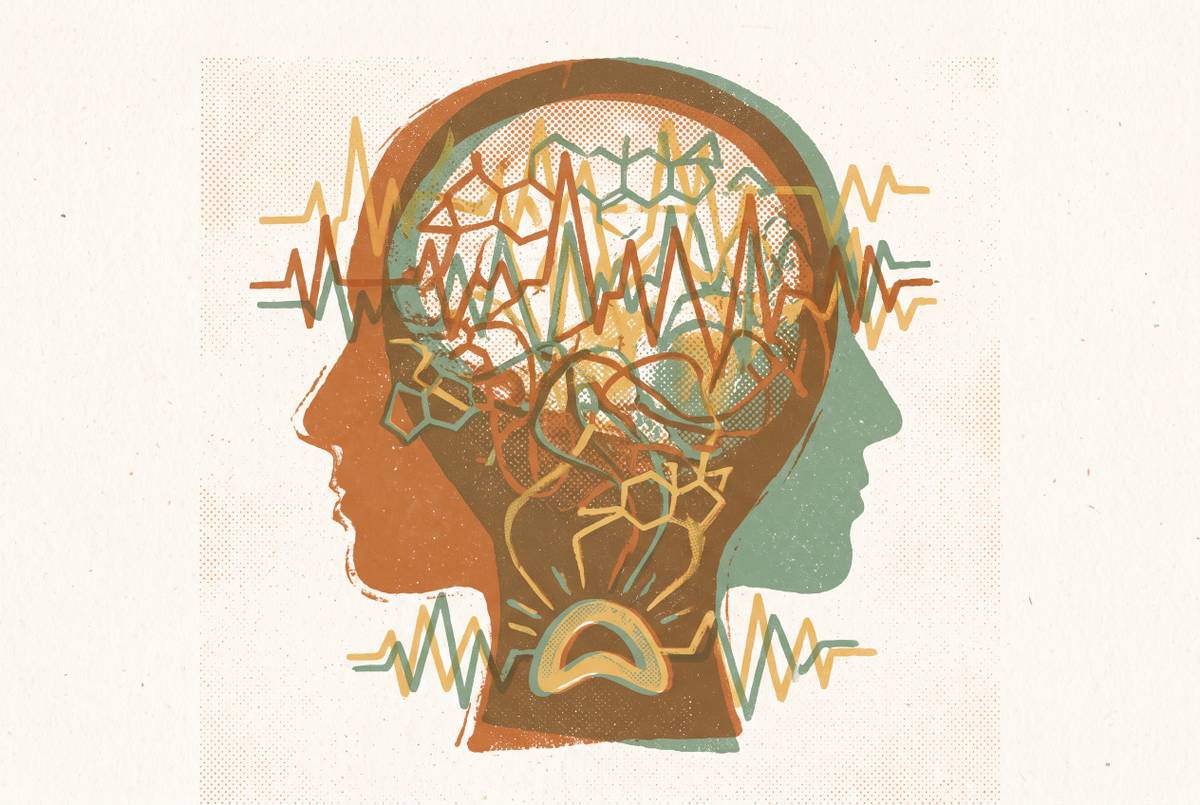
Estrogen Fluctuation and Serotonin System Instability
Hormone swings destabilize serotonin, not stress or temperament alone.
A woman in her early forties starts snapping at her kids over nothing, lies awake at 3 a.m. for no reason she can name, and feels a kind of dread that does not track to anything happening in her life. She mentions it to her doctor. She is told she is stressed, maybe anxious, and leaves with a prescription for an SSRI and no hormone panel ordered. This sequence repeats often enough that it has become close to a default pathway, and it rests on a mistaken premise: that irritability, anxiety, and emotional volatility during perimenopause originate in circumstance or temperament. Mogallapu et al. (Cureus, 2025) document the actual driver directly, describing perimenopause as a period of marked fluctuation in ovarian hormone levels, particularly estradiol, with downstream effects on the serotonergic, dopaminergic, and noradrenergic systems that regulate mood. The symptoms are produced by a destabilized neurochemical system, and that distinction changes what an appropriate clinical response looks like, a case this article builds mechanism by mechanism before returning to what it means in a doctor's office.
How estrogen regulates serotonin under normal conditions
Estrogen does a great deal of work outside the reproductive system, and its role as a neuromodulator is central to understanding perimenopausal mood change. It regulates serotonin synthesis, receptor expression, and reuptake in brain regions that have nothing to do with ovulation and everything to do with how a person feels and thinks from one hour to the next. Cho et al. (Brain Sciences, 2025) establish that estrogen receptors ERα and ERβ are expressed in the hippocampus, the prefrontal cortex, and the amygdala, the three regions most directly responsible for emotional regulation, memory, and executive function. Estrogen signaling in those regions governs how quickly a stressful moment resolves and whether a piece of information gets encoded as a memory or slips away.
Wang et al. (Translational Neuroscience, 2026) describe 17β-estradiol, the primary estrogen active in these pathways, as a neuroactive steroid that regulates mood, cognition, and neural homeostasis through both nuclear and membrane-associated receptors. That dual receptor system matters because it means estrogen can act on two different timescales: slower genomic effects through nuclear receptors, and faster signaling through membrane receptors that respond within seconds. Under stable conditions, this infrastructure supports serotonin and dopamine systems in a fairly predictable way, reinforcing synaptic connections and keeping neurotransmitter output within a workable range. The entire argument of this article depends on understanding that infrastructure, because perimenopause does not remove it. Perimenopause disrupts its timing and its reliability, and the next section explains why that disruption is often harder on the brain than the hormone loss that follows it.
Why fluctuation is neurologically harder than decline
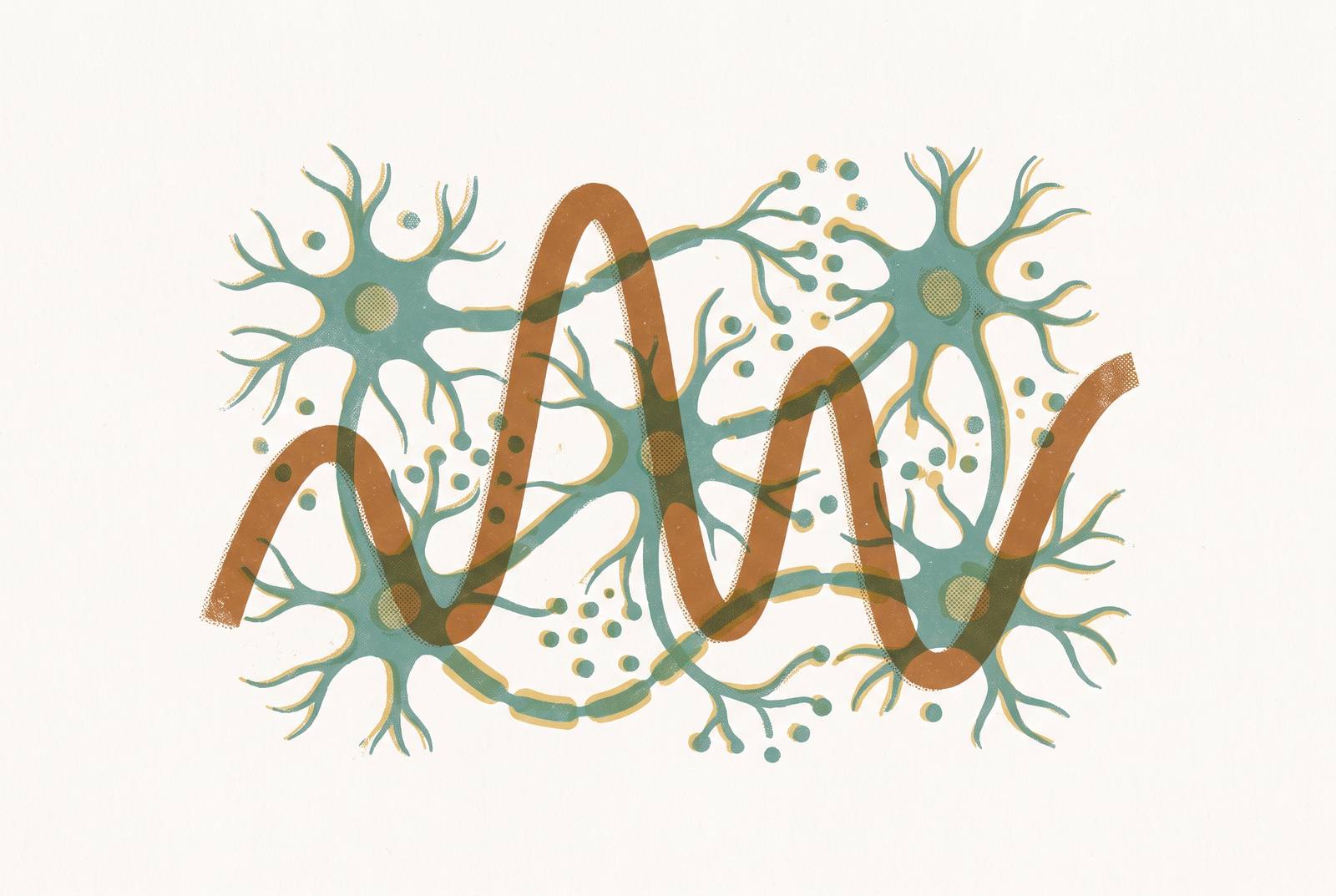
Postmenopause is defined by estrogen that is persistently low, and a low but stable hormone environment is something the brain can eventually adapt to, building a new baseline and recalibrating its serotonin systems around it. Perimenopause offers no such baseline. Estrogen during this transition rises and falls unpredictably over months or years, and Cho et al. (Brain Sciences, 2025) frame the physiological difference precisely: the menopausal transition is marked by fluctuating estrogen levels that precede the final menstrual period, while menopause itself brings a sharp and sustained decline. These are two distinct physiological states, and they produce two distinct neurological experiences.
A serotonin system calibrating to a declining hormone is working toward a fixed destination. A serotonin system trying to calibrate to an erratically oscillating hormone has no fixed destination to work toward, and the result is mood instability that does not look like depression in its classic, flattened form. It looks like mood that shifts rapidly, sometimes within the same day, without an obvious external trigger. That pattern, cyclical and disproportionate-seeming, is the signature many women report and many clinicians overlook, because it does not match the steadier depressive presentation more typically associated with postmenopausal estrogen deficiency.
One might argue that if estrogen is sometimes elevated during perimenopause, those periods should offer some protective benefit. Why wouldn't a high-estrogen day simply feel like a good day? The answer lies in what serotonin receptor systems actually need to function well: not a high level at any single moment, but sustained, consistent signaling over time. Rapid shifts disrupt receptor sensitivity even when estrogen happens to be elevated at that exact moment, because the system is reacting to the speed of change as much as to the level itself. A woman told her estrogen "looks fine" on a given test day has not been told anything about how much that number has moved in the preceding weeks, and that gap is where the neurological difficulty actually lives.
The serotonin mechanisms that erratic estrogen disrupts
Estrogen instability does not affect mood through a single switch. Wang et al. (2026) identify a set of interconnected pathways disrupted by estrogen deficiency and, by extension, estrogen instability: dysregulation of monoamine neurotransmission, hyperactivation of the hypothalamic-pituitary-adrenal (HPA) axis, decreased brain-derived neurotrophic factor (BDNF) expression, impaired mitochondrial function and bioenergetics, neuroinflammation mediated by glial cells, and disruption of gut-brain axis communication. Each pathway maps onto a recognizable piece of the perimenopausal symptom picture.
Monoamine dysregulation affects how available and how efficiently serotonin, dopamine, and norepinephrine can signal, and these three neurotransmitters are the ones most directly tied to mood, motivation, and emotional regulation. When their signaling becomes unreliable, the result is not a single symptom but a shifting cluster of them. HPA axis hyperactivation means the body's stress response system becomes over-reactive, and because the stress system and the sex hormone system regulate each other, elevated cortisol further suppresses serotonin function, compounding the instability rather than sitting beside it. Reduced BDNF impairs neuroplasticity in the hippocampus, the region responsible for learning, memory consolidation, and emotional context, which is the mechanism behind the cognitive fog and memory complaints so often reported alongside mood symptoms in this transition.
Cho et al. (Brain Sciences, 2025) add the receptor-level detail that ties these pathways together. As estrogen becomes unreliable, ERα and ERβ in the hippocampus, prefrontal cortex, and amygdala are activated less consistently, and receptor activity that had been sustaining serotonin signaling becomes intermittent. That intermittency, an unpredictable disruption rather than a steady deficit, is what produces the experienced instability. Sleep disruption enters this picture as both a symptom of the process and a force that worsens it: poor sleep further degrades serotonin synthesis and HPA regulation, so erratic estrogen produces poor sleep, and poor sleep then deepens the very neurochemical instability the estrogen fluctuation started. Irritability, anxiety, cognitive fog, and disrupted sleep look like four separate problems. They trace back to one upstream hormonal cause moving through several connected systems at once.
Why standard hormone tests miss the fluctuation signal
A blood test captures estrogen at a single point in time, and in perimenopause that single point can look entirely unremarkable even when the surrounding pattern is highly destabilizing. Clinical research confirms the limitation directly: FSH, LH, estradiol, and progesterone all fluctuate naturally during this transition, so one test offers a snapshot that may not reflect the hormonal movement actually driving a woman's symptoms. A number drawn on a calm day tells a clinician very little about what that same hormone was doing two weeks earlier or will do two weeks later.
The FSH value in particular behaves in a way that is easy to misread. Rising FSH in early perimenopause is not primarily caused by falling estradiol. It results from declining inhibin B, which removes a layer of pituitary inhibition, so an elevated FSH cannot be taken as straightforward evidence of low estrogen, and a normal estradiol reading on the same day cannot be taken as evidence that estrogen is stable. Both numbers can look technically fine while the underlying system is anything but.
Mogallapu et al. (Cureus, 2025) document a case of a 48-year-old woman with two years of irregular cycles, mood symptoms tracking her cycle irregularity, and hormone results showing elevated FSH, elevated LH, low-normal estradiol, and low progesterone. That profile, consistent with late perimenopause, appeared only in reproductive hormone testing, not in a standard mental health assessment. Hormone testing still has a role in this picture. FSH offers useful context when presentation is early, atypical, or uncertain; estradiol informs specific endocrine decisions; progesterone can help answer questions about ovulation when drawn at a meaningful point in the cycle. None of those numbers function as a verdict on their own. They function as one piece of a picture that only becomes legible across multiple timepoints.
Tracking estrogen over time versus a single snapshot
The central claim running through this piece, that erratic fluctuation rather than low estrogen alone is the pathogenic signal, cannot be demonstrated from a single reading. It can only be demonstrated from data collected over time, because a pattern of oscillation is by definition something that shows itself across multiple measurements, not one.
Episodic clinical encounters are structurally mismatched to this problem. A woman who happens to present on a day when her estrogen sits within a normal range will be told her results are unremarkable, regardless of how dramatically that same hormone has swung in the weeks before her appointment. The question a single test can answer, is her estrogen low today, is not the question that predicts her symptom burden. How much her estrogen is varying, and how that variation tracks against what she is reporting day to day, can only be known with longitudinal data in hand.
This reframing is not a hypothetical proposal; it matches where current research is already pointed. NCT05388656, a trial sponsored through a public university and a federal research institute, studies estrogen variability, not estrogen level, as the mechanistic driver of mood instability and irritability during the menopause transition. The trial, completed by January 2025, treats fluctuation itself as the thing worth measuring rather than treating a single hormone value as sufficient information. That framing lines up directly with the clinical picture built across the preceding sections: the instability is the signal, and only tracking over time can make it visible.
Clinicians misreading perimenopausal mood symptoms as primary psychiatric disorders
The misattribution named at the start of this piece has identifiable structural roots rather than a single point of individual failure. Perimenopausal women presenting with mood instability are commonly assessed using screening tools built for primary psychiatric disorders, and those tools were never designed to separate a hormonally driven symptom from a psychiatric one. The PHQ depression screens include items like disrupted sleep, appetite changes, fatigue, trouble concentrating, and mood disturbance, and perimenopause produces every one of those on its own. A woman whose symptoms are hormonally driven can score as depressed on a standard screen without having a primary depressive disorder.
Several structural features compound this. Medical training on menopause and perimenopause has well-documented gaps. Age bias plays a role too, with women in their 30s and early 40s frequently told they are too young for perimenopause to be a consideration. Anxiety disorders and perimenopausal hormonal disruption share enough symptom overlap to be difficult to pull apart in a short visit, and most visits are short: standard appointment windows rarely leave room for a full menstrual history, a symptom timeline, or a family history of early menopause, all of which matter for catching this early.
Mogallapu et al. (Cureus, 2025) note the clinical consequence that follows from this gap. Antidepressants are often used as the first-line treatment for perimenopausal mood disorders, while a subset of women may actually benefit more from hormone replacement therapy, particularly transdermal estradiol, an option that goes systematically underused whenever the hormonal differential is not explored first. Standard diagnostic criteria can miss early perimenopause even when vasomotor symptoms like hot flashes are already present. Catching it requires actively asking about symptom timeline, cycle history, and family history rather than waiting for a woman to volunteer those details unprompted.
Advocating for a hormonal differential in a clinical encounter
Understanding the mechanism changes what a woman can reasonably ask for in an appointment. A hormonal differential, not an automatic psychiatric diagnosis, is a reasonable starting point for mood symptoms that appeared or worsened alongside cycle changes in a woman's late 30s, 40s, or early 50s. That request has backing: the North American Menopause Society and the American College of Obstetricians and Gynecologists both recognize perimenopause as a complex hormonal transition with real neuropsychiatric effects.
A useful starting point in an appointment is a cycle and symptom timeline, since the research throughout this piece points to irregularity and timing as more diagnostically meaningful than a single hormone number. Bringing a record of cycle length changes, mood pattern over weeks rather than a single bad day, sleep disruption, and any family history of early menopause gives a clinician something closer to the longitudinal picture that single-point testing cannot provide. Asking directly whether a hormonal cause has been ruled out before an antidepressant is prescribed, and asking what a trial of transdermal estradiol might look like as an alternative or complement, puts the hormonal differential on the table rather than leaving it implicit.
None of this requires rejecting psychiatric treatment outright, since antidepressants help some women and mood symptoms deserve to be taken seriously regardless of their origin. What it requires is insisting that the origin gets investigated rather than assumed. A woman who understands that erratic estrogen, not personal failing or unmanaged stress, is driving her serotonin system out of balance is in a stronger position to ask her clinician the question this entire piece has been building toward: not whether her hormones look normal today, but whether anyone has looked closely enough to see how much they are moving.
Sources
- Review began 07/28/2025 Review ended 10/10/2025 Published 10/16/2025
- Beyond Hot Flashes: The Role of Estrogen Receptors in Menopausal Mental Health and Cognitive Decline - PMC
- Estrogen Variability and Irritability During the Menopause Transition
- Hormonal Decline and Neurotransmitter Dysregulation in Menopause: Pathways of Psychiatric Vulnerability - PMC
- Beyond Selective Serotonin Reuptake Inhibitor (SSRIs): Exploring Hormonal Therapy for Mood Disorders in Perimenopause and Postmenopause
- Frontiers
- The Role and Mechanism of Estrogen in Perimenopausal Depression - PMC
- Role of Estradiol in the Expression of Genes Involved in Serotonin Neurotransmission: Implications for Female Depression - PMC