Estrogen's Role in Memory and Working Cognition
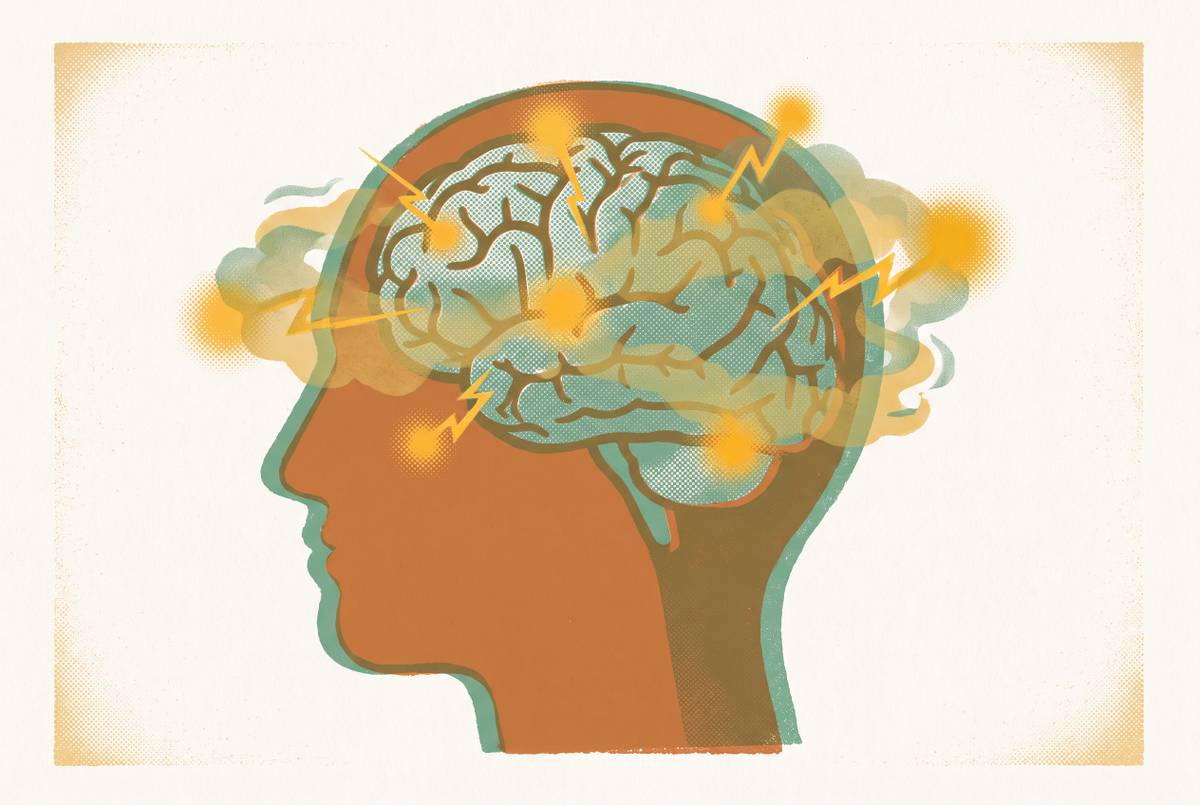
Estrogen's withdrawal scrambles the brain circuits that encode memories and hold thoughts.
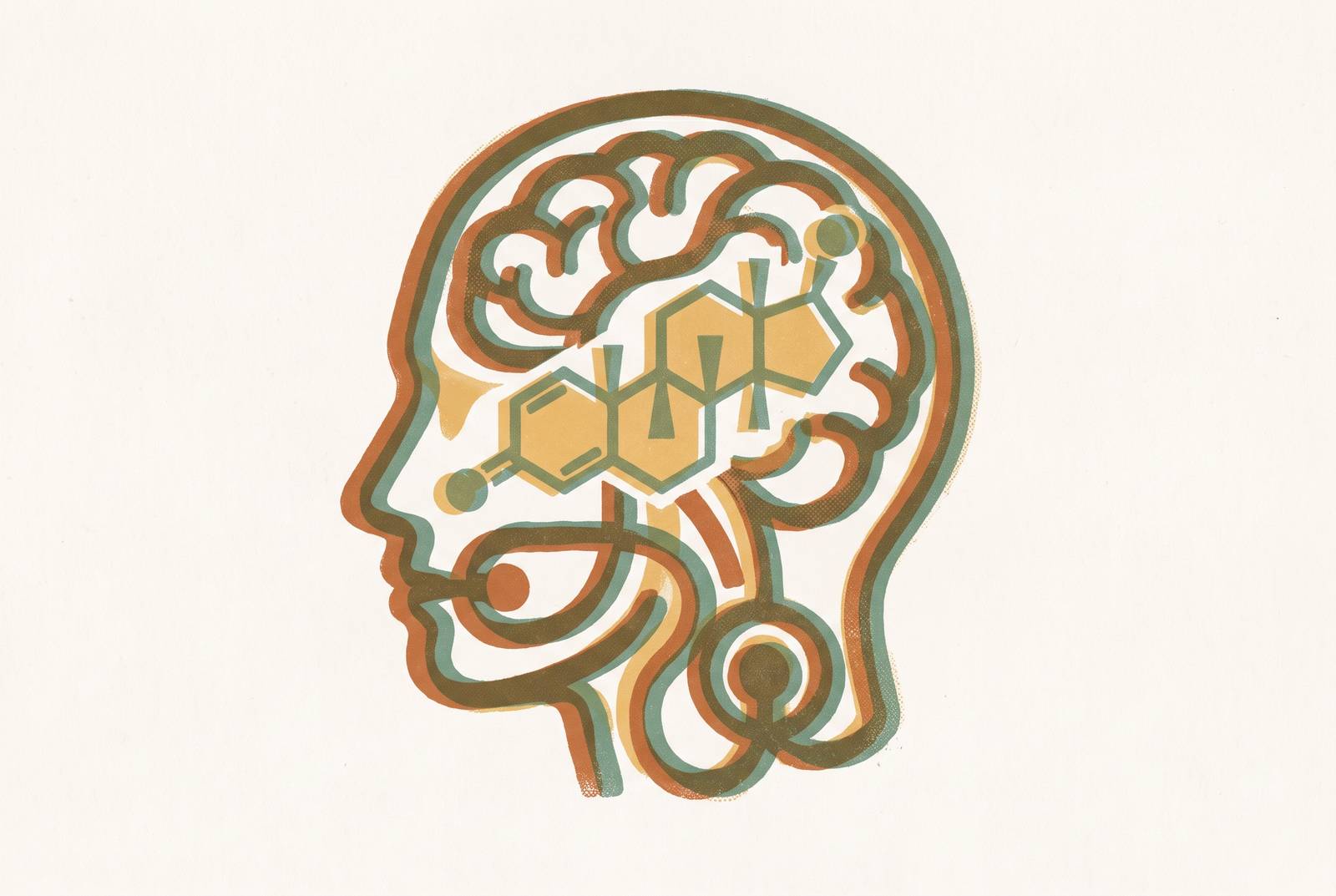
Word-finding failures mid-sentence. Names that slip away right before they land. A thought that dissolves the moment you try to act on it. These are the hallmark complaints of perimenopause, and they get waved off constantly, chalked up to stress, aging, or anxiety by clinicians and by the culture at large. But the biology behind them is specific, measurable, and well-documented: estrogen regulates the exact brain systems responsible for memory encoding, working memory, and verbal recall, and its decline during the menopausal transition produces real cognitive effects, not imagined ones.
The scale of the problem is not small. Cross-sectional research summarized in a Lancet personal view puts the rate of women reporting cognitive concerns during perimenopause at roughly two-thirds. Memory complaints alone range from 26% to 95% depending on the study, and concentration difficulties run from 52% to 90%. That is not a fringe symptom cluster. That is most women going through this transition, and yet a huge number of them leave a doctor's appointment with reassurance instead of an explanation. This piece exists to close that gap: not with lifestyle tips, not with a pep talk, but with a plain account of what estrogen actually does in the brain and why losing it, unevenly and unpredictably, produces the exact symptoms so many women are told to ignore.
What estrogen is doing in the brain before any cognitive symptoms appear
Estradiol, known as E2, is the dominant and most potent form of estrogen in the years before menopause, and its reach inside the brain is broad. Estrogen receptors sit densely across the cortex and the hippocampus, among other regions, and that distribution is not incidental. It is architectural. The brain did not bolt estrogen on as an afterthought; large parts of it were built to run on estrogen's presence.
Some of that estrogen doesn't even come from the ovaries. The brain makes its own, synthesizing so-called neuroestrogens locally, and these act directly on the hippocampus to support memory-relevant neural processes. Estrogen also props up neurotransmitter systems that everything else depends on, including dopamine and serotonin, which form the chemical infrastructure for cognitive and emotional regulation alike.
Then there's the metabolic layer, which is easy to overlook but affects cerebral glucose metabolism and mitochondrial function directly. Research has tied menopause to measurably diminished cerebral glucose metabolism and impaired mitochondrial function, suggesting estrogen plays a role in supporting these processes. So when estrogen falls, the brain loses more than a signaling molecule. It's running on a downgraded power supply. Because it reframes the whole conversation, a hormone is being withdrawn from systems that had come to depend on it, not doing something mysterious to the brain. It's a hormone being withdrawn from systems that were depending on it the entire time.
How the hippocampus and prefrontal cortex depend on estradiol for memory encoding and working memory
Two brain regions do most of the heavy lifting here, and they produce two distinct flavors of symptom. The hippocampus handles encoding and episodic recall, the process behind the name you can't retrieve or the errand you completely forgot. The prefrontal cortex, or PFC, handles working memory and executive function: holding a thought in mind while doing something else, switching between tasks without losing the thread.
When estradiol drops, hippocampal activation during encoding decreases, and the brain appears to compensate by recruiting the anterior cingulate cortex and the dorsolateral prefrontal cortex instead. In other words, the brain works harder to accomplish the same task. Higher E2 levels, by contrast, correlate with increased activation in temporal and frontal cortices during encoding, and the system runs more efficiently when estrogen is more available.
The PFC has its own vulnerability, and it's a sensitive one. Small shifts in cortical dopamine, which estrogen helps modulate, can meaningfully disrupt working memory. This isn't a subtle effect confined to lab instruments, either: in research settings, women using estrogen perform significantly better on verbal tasks that carry a heavy working memory component.
A study in Brain Imaging and Behavior adds a layer that activation studies alone can't capture. Using Human Connectome Project data from 150 women ages 40 to 55, researchers found that estradiol level was significantly associated with task-modulated effective connectivity between memory-relevant regions during the recall phase of an episodic memory task (p <.05, FDR corrected). Five specific connections came out significant, involving the superior frontal gyrus, the middle temporal gyrus, and the superior temporal gyrus. What does that mean in practice? It means individual regions fire less, and the regions also stop talking to each other as efficiently. It's that the regions stop talking to each other as efficiently, and retrieving a memory requires exactly that kind of coordinated conversation.
Why perimenopause produces erratic cognitive symptoms rather than a steady decline
Estradiol during early perimenopause doesn't decline in a straight line. Longitudinal daily and serial sampling shows it swinging between supraphysiological peaks and deep troughs, sometimes within the same cycle. Volatility, not decline, defines the early transition. That single fact explains an enormous amount of the confusion women run into when they try to get help.
Because average levels can land within a normal reproductive-age range even while the swings themselves are wreaking havoc, a single hormone test can come back "normal" while the person taking it is struggling through a genuinely disruptive stretch of symptoms. The test is measuring one point on a jagged, erratic line. It's just measuring one point on a jagged, erratic line.
Progesterone adds another layer. It doesn't fluctuate as wildly as estradiol early on, but it declines steadily in late perimenopause, and its metabolites normally provide a kind of GABAergic calming effect. Lose that restraint, and emotional reactivity climbs while executive function takes a hit. Meanwhile cortisol, a marker of HPA axis activity, tends to rise even as estradiol and progesterone are falling, stacking a stress-hormone layer on top of an already disrupted system.
FSH tells its own part of the story. It starts rising, and inhibin B starts dropping, roughly five years before the final menstrual period. Values above 25 mIU/mL signal the beginning of the menopausal transition in a clinically meaningful way, but FSH by itself can't capture the full hormonal picture any more than a single estradiol draw can. When you put it all together, the erratic, good-day-bad-day quality of perimenopausal cognition stops looking like inconsistency in how a woman reports her own experience. It starts looking like an accurate readout of what her hormones are actually doing.
What objective testing and brain imaging show versus what women report
So how do these subjective complaints hold up against formal testing? The answer is more nuanced than either "it's all in her head" or "the tests prove it." Longitudinal data from the SWAN and Avon Longitudinal studies show measurable declines in verbal learning and memory during the menopausal transition, but according to the Lancet synthesis referenced above, objective neuropsychological performance on standard testing generally stays within expected ranges.
That gap deserves a careful read, because it's routinely misused as evidence against women's own accounts. A 2025 systematic review and meta-analysis covering 5,007 participants found a statistically significant link between subjective cognitive decline and objective learning efficiency, but not for working memory or processing speed. Staying within an expected range doesn't mean the complaints are baseless; it means the instruments built for population-level research aren't sensitive enough to catch the individual-level disruption a woman is living through day to day.
Much of what gets labeled "memory loss" during perimenopause is actually a retrieval problem: information that's still encoded, just harder to access quickly. Word-finding failures and short-term recall lapses tend to fall into this category far more often than permanent memory loss does.
There's now a name for the more severe end of this spectrum. Menopause-Related Cognitive Impairment, or MeRCI, described in a Frontiers in Molecular Biosciences review by Mervosh and Devi, refers to cognitive symptoms during the menopausal transition that include objective evidence of language, executive function, or memory impairment, in the absence of other explanatory conditions. MeRCI and ordinary subjective cognitive decline during perimenopause are distinct from mild cognitive impairment and from dementia. Naming the condition gives something real a real vocabulary. It's about giving something real a real vocabulary.
The longer-term risk signal: estrogen's decline and Alzheimer's vulnerability in women
Roughly 7 million people in a country studied in the research live with Alzheimer's disease, and about two out of every three cases occur in women. For years the standard explanation was simple: women live longer, so of course more of them develop it. That explanation is looking thinner all the time. A Frontiers review by Mervosh and Devi argues that biological, hormonal, and sociocultural factors, not lifespan differences alone, are the primary drivers behind the sex disparity in both risk and how the disease appears clinically.
The mechanisms line up with everything already covered here. Estrogen's roles in synaptic plasticity, mitochondrial function, and cerebrovascular integrity are the same systems implicated in Alzheimer's pathogenesis. And Alzheimer's, it's worth noting, is rarely a single clean pathology. Neuropathologic studies find that somewhere between 66% and 100% of AD cases show coexisting brain pathologies, including vascular injury and Lewy body disease, which is part of why estrogen's vascular role is central. It's central, because that overlap in pathology means estrogen's vascular role is a core factor, not a side note.
Genetics complicate the picture further. A preprint from Schroeder et al., University of Illinois Chicago and University of Pittsburgh, found that APOE4, the well-known Alzheimer's risk gene variant, changes how endogenous estradiol relates to hippocampal functional connectivity, Alzheimer's biomarkers, and memory performance in postmenopausal women. The estrogen-cognition relationship isn't uniform. It bends depending on genotype.
None of this amounts to a forecast. Perimenopause is a hormonally modulated window that appears relevant to long-term brain health, and that's a meaningfully different claim than telling any individual woman she's destined for dementia. One might argue the more useful takeaway is that this window deserves attention precisely because it's a window, a period when biology is actively shifting and, per the next section, possibly still responsive to intervention.
What hormone therapy research reveals about the estrogen-cognition relationship, and why timing matters
If estrogen genuinely drives these cognitive effects, hormone therapy should show some signal, and it does, though the picture depends heavily on when therapy starts. Research supports what's known as the critical window hypothesis: therapy started closer to the menopausal transition tends to associate with more favorable cognitive outcomes, while starting later, or waiting longer after menopause, associates with neutral or even adverse outcomes. Timing isn't a footnote here. It may be the whole story.
That's part of why the timing of hormone therapy initiation has become a central consideration in clinical discussions. A study out of UCLA's David Geffen School of Medicine, published in Scientific Reports, found significant improvements at the twelve-month mark in self-reported brain fog, concentration, working memory, processing speed, verbal memory, and problem solving.
But the evidence isn't uniformly positive, and it shouldn't be flattened into a simple success story. A 2024 meta-analysis found no overall effect of hormone therapy on cognitive domain scores, and a 2025 meta-analysis found no evidence that it either raises or lowers dementia risk. Those findings sit alongside the more encouraging data rather than canceling it out; the honest reading is that timing, formulation, and individual biology determine outcomes more than a blanket verdict of "works" or "doesn't."
Regulation is catching up to some of this nuance. Regulatory bodies have revisited labeling for hormone therapy products, with recent changes addressing boxed-warning language tied to probable dementia risk. That original warning traced back to a long-term memory study tied to a national women's health research program, built on two trials of oral estrogen therapy started in women ages 65 to 79. None of this is a verdict for or against treatment. It's evidence, plain and simple, that estrogen causally shapes cognitive systems, and that when you intervene relative to the transition seems to matter almost as much as whether you intervene.
Why tracking hormone levels over time gives a more accurate picture than a single test
Go back to the volatility described earlier: within-cycle and across-cycle hormonal swings define perimenopause. A single estradiol draw might land during a peak, a trough, or somewhere in between, and there's no way to know which just by looking at the number. That single value cannot characterize a transition that is, by definition, in motion.
Clinical guidelines already treat even FSH, which is more stable than estradiol, with appropriate caution: when the clinical picture is unclear, two draws four to six weeks apart are recommended rather than relying on one. The STRAW+10 staging framework, the standard system for classifying where a woman sits in the menopausal transition, uses menstrual pattern alongside biomarkers to characterize the transition. Staging framework, the standard system for classifying where a woman sits in the menopausal transition, relies primarily on menstrual pattern, with biomarkers playing a supporting role. That design choice says something important on its own: the people who built the staging system understood that a pattern observed over time carries more information than any single biomarker value ever could.
Longitudinal tracking reveals things a snapshot simply cannot. It shows the direction of change, rising FSH and falling estradiol over months, not just where things sit today. It shows whether a "normal" reading reflects genuine stability or just happens to be a peak inside an otherwise erratic pattern. And it lets someone actually correlate hormonal shifts with when symptoms occur, which a single draw has no way of doing.
That connects directly back to the cognitive symptoms this piece opened with. Their unpredictability, the good days and the inexplicably foggy weeks, tracks the same volatility that only repeated measurement over time can expose. So when a woman has been told her labs are "normal" but she's still struggling, there's a fair question to ask in return: normal compared to what, and normal measured when?
How to talk to a clinician about cognitive symptoms and hormone testing when you keep getting reassured instead of heard
Some of the dismissal women encounter reflects a structural gap rather than the fault of any one clinician. It's structural. The Lancet synthesis notes that there has been no unified clinical definition for menopause-related cognitive symptoms, and it proposes a working one specifically to fill that void. Without a shared framework, clinicians often have no consistent tool to reach for, and patients get variable answers depending on who happens to be in the room. That's not an excuse. It is, however, a more accurate diagnosis of the problem than assuming bad faith.
Walking into an appointment armed with the right vocabulary changes the conversation. Naming Menopause-Related Cognitive Impairment, MeRCI, signals that this is a recognized clinical concept. Drawing the distinction between retrieval difficulty, the common perimenopausal experience of information being encoded but hard to access quickly, and genuine memory loss, a separate and more serious clinical concern, helps a clinician triage appropriately. And raising the hormonal variability of perimenopause directly explains why a single lab draw might not tell the whole story.
Ask for specific things. Estradiol and FSH testing, with a repeat draw four to six weeks later if the first comes back "normal" but symptoms persist. A clinician willing to correlate the timing of symptoms with hormonal data gathered across multiple cycles, rather than judging everything off one visit. And, if hormone therapy comes up as an option, a direct conversation about the critical window: where someone sits relative to the onset of perimenopause is not a minor detail, it's clinically central to how that therapy is likely to perform.
Preparation helps too. A symptom log kept before the appointment, tracking cognitive episodes alongside sleep quality, vasomotor symptoms, and menstrual pattern, gives a clinician pattern data even when formal lab data is thin or inconclusive. And it's worth remembering that none of this requires a clinician to speculate. The research summarized across this piece, from the connectivity findings in Brain Imaging and Behavior to the Lancet's proposed definition to the UCLA treatment data, already exists as an active, evolving scientific conversation. Asking a clinician to engage with it is asking them to treat an established body of evidence as established. It's asking them to treat an established body of evidence as established.
Periodic hormone testing, then, is an ongoing tool. It's an ongoing tool, one that, tracked over months and matched against symptoms as they rise and fall, is how a woman starts to understand her own hormonal trajectory through a transition that was never going to move in a straight line to begin with.
Sources
- Brain Fog and Beyond: What Science Knows About Cognition During Menopause | Well Woman Today
- Estradiol modulated brain connectivity in females during midlife performing an episodic memory task | Brain Imaging and Behavior | Springer Nature Link
- Targeting hormone treatment for the brain in menopause - PMC
- Frontiers | Estrogen, menopause, and Alzheimer’s disease: understanding the link to cognitive decline in women
- Estradiol and memory circuitry in the postmenopause: Modification by APOE4 - PMC
- thelancet.com
- pmc.ncbi.nlm.nih.gov
- pmc.ncbi.nlm.nih.gov