Cortisol, Stress Response, and Emotional Dysregulation
Erratic hormones disrupt the stress-response system that keeps emotional reactions proportionate.
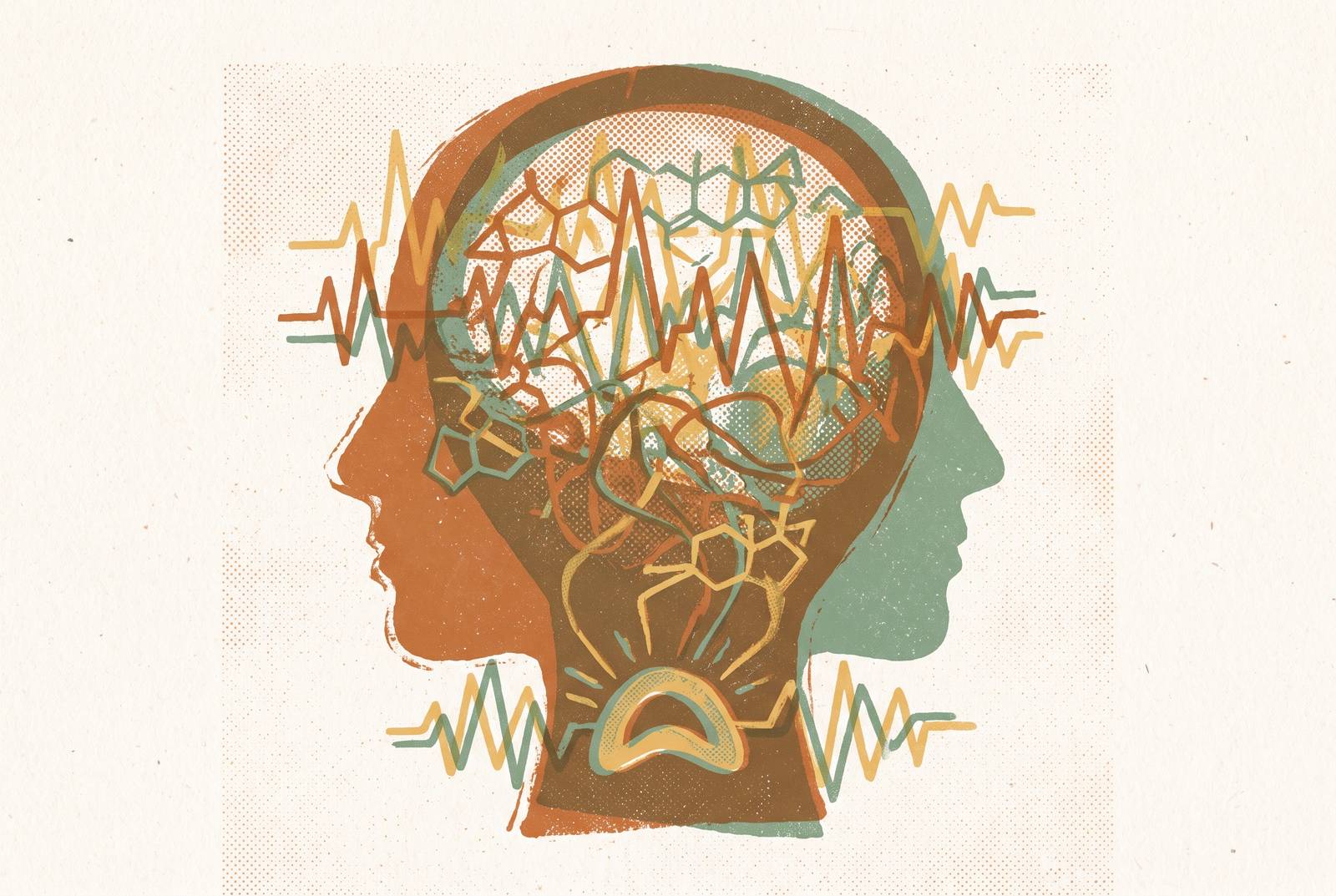
The hypothalamic-pituitary-adrenal axis is the body's central stress-response loop, and estrogen is one of its key regulators. When estrogen becomes erratic, as it does throughout perimenopause, that loop breaks down in ways that are predictable and traceable. The mechanics, laid out before examining what happens when they go wrong, make the disruption make sense once the healthy system is clear.
The loop runs in a straightforward cascade. A stressor, physical or psychological, prompts the hypothalamus to release a signaling hormone that travels to the pituitary gland. The pituitary responds by releasing its own messenger, which travels to the adrenal glands sitting atop the kidneys. The adrenal glands then release cortisol, the hormone most associated with stress but whose job is broader than that label suggests: cortisol affects metabolism, immune activity, and behavior across nearly every tissue in the body. Once cortisol has done its work, it circulates back to the brain and signals the hypothalamus and pituitary to stand down. That feedback step matters as much as the activation step. A stress response that cannot shut itself off is no longer protective.
Estrogen's job within this loop is to act as a modulator of cortisol sensitivity and a brake on the stress response. When a stressor passes, estrogen helps signal the system to stand down, supporting the same feedback mechanism that cortisol itself relies on. Estrogen does this in part by supporting the sensitivity of GABA receptors, the receptors responsible for the brain's main calming signal. With adequate estrogen support, GABA does its job efficiently: it quiets neural activity once a threat has passed, allowing the nervous system to return to baseline.
Progesterone plays a parallel, complementary role. It converts in the body to allopregnanolone, a neurosteroid that activates GABA-A receptors directly and provides its own calming buffer, independent of estrogen. Progesterone typically declines before estrogen does in the perimenopausal transition, so the GABA-calming system starts losing one of its two major supports years before a woman notices any change in her menstrual cycle. The system that keeps the stress response proportionate, responsive, and self-limiting depends on two hormones working in tandem, each supporting GABA through a different mechanism. That dependency is precisely what makes the system vulnerable once one of its supports starts to erode.
What Perimenopause Does to That System
Perimenopause is defined not by falling hormone levels but by erratic ones, with the variability of estrogen, not its eventual decline, destabilizing the HPA axis most directly. This distinction carries real weight: a system built to adapt to gradual change is far better equipped than one asked to tolerate wide, unpredictable swings.
The scale of that variability is not subtle. Research comparing daily hormone levels in reproductive-aged women against perimenopausal women has found that estradiol during perimenopause can reach extremes, with luteal-phase estradiol sometimes doubling the levels seen during the late follicular phase in younger women. A system calibrated to a narrower range of inputs is being asked to process swings far outside what it evolved to handle. When estrogen is oscillating rather than holding steady, the cortisol response becomes harder to predict: some women over-respond to minor stressors that would barely have registered before, while others find cortisol stays elevated long after a stressor has resolved, so recovery time stretches out in a way it never used to.
The adrenal glands face a double-bind during this period. They are responsible for producing cortisol, the primary stress hormone, but they also produce small amounts of sex hormones as ovarian output declines. The body prioritizes survival functions over reproductive ones. The same glands managing the stress response are simultaneously being asked to compensate for the ovaries' fading hormone production. That is a lot to ask of one small pair of organs.
The timeline matters as much as the mechanism. Progesterone declines first, often years ahead of estrogen, so the GABA-calming buffer erodes before the more dramatic estrogen swings even begin. A 2024 study in Frontiers in Psychiatry found that early perimenopausal women reported the highest levels of stress and the lowest psychosocial quality of life across every menopausal stage studied. The burden of HPA axis disruption is not distributed evenly across the transition. It peaks early, often before a woman would think to associate her symptoms with perimenopause. As the transition progresses further, anovulatory cycles become more common, estrogen trends toward a lower overall baseline while still producing intermittent surges, and follicle-stimulating hormone becomes more consistently elevated, a sign that the ovaries are responding less reliably to the brain's signals.
The depression research reinforces the case for variability as the driver. Studies indicate a substantially increased risk for major depressive disorder during perimenopause compared to late premenopause, and that elevated risk recedes once estrogen settles into a stable, if lower, postmenopausal baseline. If low estrogen alone caused the psychological burden, the risk would stay elevated or worsen after menopause, when estrogen is at its lowest sustained point, but it doesn't. It falls once the hormone stabilizes, which points toward volatility, not the level itself, as the mechanism driving the distress.
How a dysregulated stress response produces outsized emotional reactions
Disproportionate irritability, sudden anxiety, and overwhelming reactions to ordinary demands are not a personality shift. They are the downstream expression of a system that activates faster and recovers more slowly than it once did. Tracing the biology pathway by pathway shows why the emotional experience tracks so closely with what is happening at the hormonal level.
Estrogen is the first pathway. It regulates the HPA axis directly and supports both GABA and serotonin signaling. As estrogen fluctuates, cortisol stays elevated for longer stretches after a stressor has passed, and the result is anxiety, irritability, and a sense of being overwhelmed by demands that would once have seemed manageable.
Progesterone is the second. Its conversion to allopregnanolone activates GABA-A receptors directly, and as progesterone declines, that activation weakens. GABA signaling loses strength, and the brain remains in a heightened state of alert even when no real threat is present.
GABA itself forms a third pathway, compounded by a separate biochemical cascade: estrogen loss lowers magnesium levels in the body, and magnesium is itself involved in GABA function, producing a deficit that compounds the direct hormonal effect.
Serotonin is the fourth. It falls as estrogen drops, reducing the nervous system's capacity to regulate mood on its own terms, independent of the GABA and cortisol mechanisms already in motion.
Taken together, these four pathways converge on the same outcome: stress events during perimenopause trigger a cortisol response that is both longer and stronger than it would have been a few years earlier, and the nervous system becomes hyperreactive even to low-level daily demands that carry no real danger. New-onset anxiety and panic, including in women with no prior psychiatric history, follow logically from this system rather than representing some sudden psychological development or a failure of coping skill. One might ask why a woman with decades of demonstrated resilience would suddenly find herself undone by a missed email or a delayed train. The answer sits in the biology just described: the trigger hasn't changed in size. The system processing it has.
How poor sleep and cortisol form a self-reinforcing cycle
Cortisol dysregulation and disrupted sleep are not two separate problems sitting side by side. They form a bidirectional loop in which each one worsens the other, and perimenopause creates the conditions for both at the same time.
Cortisol's normal rhythm is tied tightly to the sleep-wake cycle. It is meant to be highest shortly after waking and lowest in the evening, tapering down to allow the body to shift into rest. When the HPA axis is dysregulated, that evening taper can fail to happen, leaving cortisol elevated at precisely the hour it should be declining. A nervous system held in that state, marked by elevated evening cortisol, reduced heart rate variability, and heightened sympathetic tone, cannot make the shift into parasympathetic dominance that sleep requires. The body is, in a literal physiological sense, still on alert at bedtime.
This also shapes the pattern of waking in the middle of the night. Cortisol dysregulation is associated with waking in the early morning hours feeling alert or anxious, often for no identifiable reason. Cortisol dysregulation firing at an hour when it should be quiet produces this waking, a direct output of a dysregulated HPA axis rather than insomnia in the ordinary sense of difficulty falling asleep.
The loop closes from there. Disrupted sleep impairs the body's ability to regulate cortisol the following day, and the resulting sleep deprivation raises cortisol further, heightens emotional reactivity, and reduces the nervous system's resilience to stress. The next day's ordinary demands then land on a system that started the morning already degraded. Why would a single bad night of sleep carry such weight? Because it is never really a single night in isolation. Each disrupted night feeds the next day's dysregulation, which feeds the next night's disruption, compounding the cycle.
The consequences extend well past mood and sleep complaints. Chronically elevated cortisol affects insulin sensitivity, body weight, and systemic inflammation. The emotional and stress-related symptoms discussed throughout this piece are not an isolated psychological phenomenon. They are one visible expression of a physiological state that has consequences across the body, and that fact alone argues against treating the emotional symptoms as something separate from the rest of a woman's physical health during this transition.
Why women experiencing this are so often told their symptoms are psychological
The biology described in the previous four sections runs directly against how the healthcare system typically responds when a perimenopausal woman presents with anxiety, irritability, or emotional overwhelm. The far more common response is to treat the symptom in front of the clinician instead of investigating the hormonal driver behind it.
Perimenopause remains chronically under-diagnosed, and the symptoms most closely tied to HPA axis dysregulation, including new-onset anxiety, irritability, emotional lability, and sleep disruption, are also the symptoms most likely to be attributed to general stress, aging, or a standalone mental health condition without any hormonal evaluation taking place. A woman in her early forties describing sudden panic attacks is more likely to leave an appointment with a prescription for an anxiety medication than with a hormone panel ordered.
Part of the difficulty is that hormone testing itself is genuinely complicated during this window, and that complexity gets used to dismiss concerns. In early perimenopause, estradiol can actually run elevated, which suppresses FSH through the body's own negative feedback mechanism. That means FSH can look entirely normal on a given day while the underlying hormonal volatility is in full swing beneath it. A single normal FSH reading in a symptomatic woman in her early-to-mid forties does not rule out perimenopause. It may simply reflect where she happens to be in a particular cycle, on a particular day, when the blood was drawn.
Clinical guidance adds another layer to this problem. The 2025 European Society of Endocrinology guideline, published in the European Journal of Endocrinology, states that biochemical testing is not needed for diagnosis or management of perimenopause and menopause in women older than 45. That guidance reflects a real and defensible limitation: a single snapshot test cannot capture a condition defined by its volatility over time. In practice, though, that same guidance can reinforce a tendency among clinicians to dismiss testing requests from symptomatic women, particularly those younger than 45 who do not fit neatly into the guideline's age frame to begin with.
The framing clinicians offer matters as much as the testing decisions themselves. Telling a woman that her emotional dysregulation is a coping problem, solvable through stress reduction or therapy alone, misses the HPA mechanism. Chronic stress dysregulation of this kind cannot be resolved through willpower, because the underlying physiological state is not something a person can simply decide to override. One might argue that therapy and stress management still have real value here, and they do. But offered as the entire explanation, in place of any hormonal investigation, that framing leaves the actual driver of the symptoms unaddressed. Because the mechanism behind these symptoms is identifiable and traceable through specific hormonal pathways, the path toward understanding an individual case can be specific too, rather than defaulting to a generic psychological explanation.
What Hormone Testing Can and Cannot Tell You About Your Stress Response
A single hormone measurement cannot capture what perimenopause actually is: a pattern of volatility expressed across months, not a fixed state visible in one blood draw. That is precisely why repeated testing over time reveals a picture that a one-time snapshot cannot.
Estradiol measured in isolation tells a limited story without FSH, LH, and cycle-timed progesterone providing context around it. It says nothing at all about androgens, adrenal hormone output, or the thyroid overlap that can mimic or compound perimenopausal symptoms. A comprehensive panel, measured against this context, can start to separate hormonal volatility from other possible explanations for the same symptoms.
Progesterone carries its own strict timing requirement. It needs to be measured during the luteal phase, roughly seven days before the next expected period, which falls around day 21 only in a standard 28-cycle. A progesterone value drawn outside that window carries little meaning regardless of the number it produces, and a clinician or lab unaware of a woman's actual cycle timing can easily misread a low reading as a hormonal problem when it simply reflects the wrong day of measurement.
Anti-Müllerian hormone, by contrast, offers a different kind of information. AMH decreases steadily as menopause approaches and provides a view of ovarian reserve that holds independent of where a woman happens to be in her cycle on the day of testing. It will not explain why a given week felt emotionally unbearable, but it does offer a stable marker of where a woman sits in the broader transition, one that does not swing with the same volatility as estradiol or progesterone.
What emerges from these limitations is an argument for testing with repeated measurements across weeks or months. A woman whose estradiol reads as normal in April and then swings sharply by June has not generated contradictory data. She has generated exactly the kind of pattern the biology described throughout this piece would predict. Tracking over time turns what looks like inconsistency into evidence, replacing the question "is this normal" with a more useful one: what is this woman's pattern of change, and what does that pattern say about where she sits in a transition defined, from its first biological signal to its last, by instability.
Sources
- Frontiers
- Cortisol and ACTH Response to Dex/CRH Testing in Women With and Without Perimenopausal Depression
- Steroid Hormone Secretion Over the Course of the Perimenopause: Findings From the Swiss Perimenopause Study
- Menopause-Associated Depression: Impact of Oxidative Stress and Neuroinflammation on the Central Nervous System—A Review
- Frontiers
- The role of the hypothalamic-pituitary-adrenal axis in depression across the female reproductive lifecycle: current knowledge and future directions - PMC
- Worse sleep architecture but not self-reported insomnia and sleepiness is associated with higher cortisol levels in menopausal women - ScienceDirect
- Acute sleep deprivation disrupts emotion, cognition, inflammation, and cortisol in young healthy adults