Mood Symptom Tracking Across the Perimenopausal Cycle
Tracking irritability patterns across the cycle reveals hormonal, not psychiatric, causes.

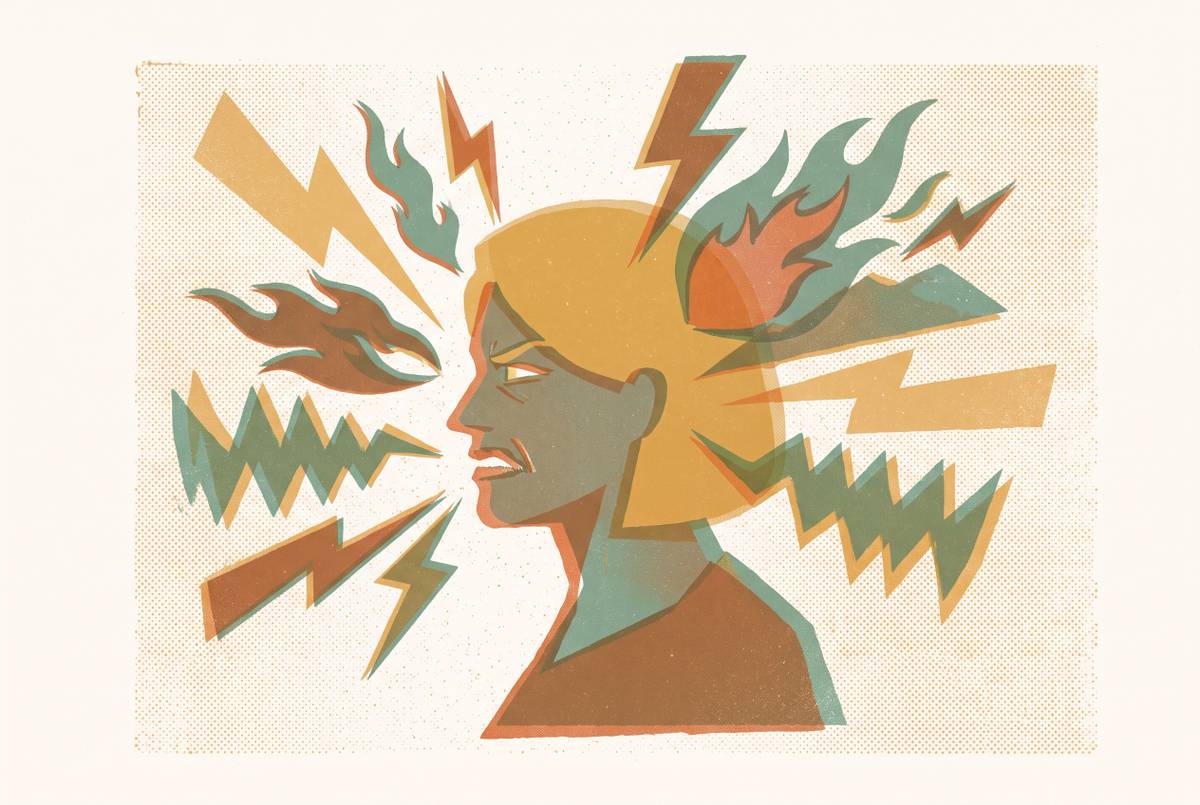
A woman in her early forties describes months of irritability, disrupted sleep, and a new, unfamiliar anxiety that arrives for no clear reason. She leaves the appointment with a prescription for an antidepressant and no mention of estradiol, progesterone, or the possibility that her cycle itself might explain what she is feeling. That gap, between a hormonal transition and a psychiatric diagnosis, is the subject of this piece: mood symptoms in perimenopause are driven by estradiol variability rather than simple decline, and that distinction is what makes structured symptom tracking clinically useful.
The healthcare system was not built to catch this kind of case. Research published in the British Journal of General Practice by Burgin and colleagues found this kind of mutual blind spot: both patients and GPs may overlook the association between perimenopause and mood changes, and GPs themselves reported variable approaches to even asking about perimenopausal symptoms, along with acknowledged gaps in their own training. When the clinician asking the questions was never trained to ask about cycle changes alongside mood changes, the two get separated at the first point of contact and rarely get reunited.
Certain clinical signals point toward a hormonal cause rather than a primary psychiatric one, including a partial, incomplete response to an antidepressant, where some symptoms ease but others persist untouched, which often indicates that the underlying driver was never fully psychiatric to begin with.
The diagnostic picture gets harder to read because other midlife conditions overlap with perimenopause almost symptom for symptom. A brief word on irritability: it is, by the evidence, the primary source of impairment and distress among perimenopausal women with affective symptoms, not low mood or sadness. Standard depression screening tools were built around a sadness-dominant presentation, so a woman whose main symptom is irritability can score low on a depression screen while still experiencing significant functional impairment, an instrument-design problem that compounds everything already working against her.
What estradiol does in the perimenopausal brain
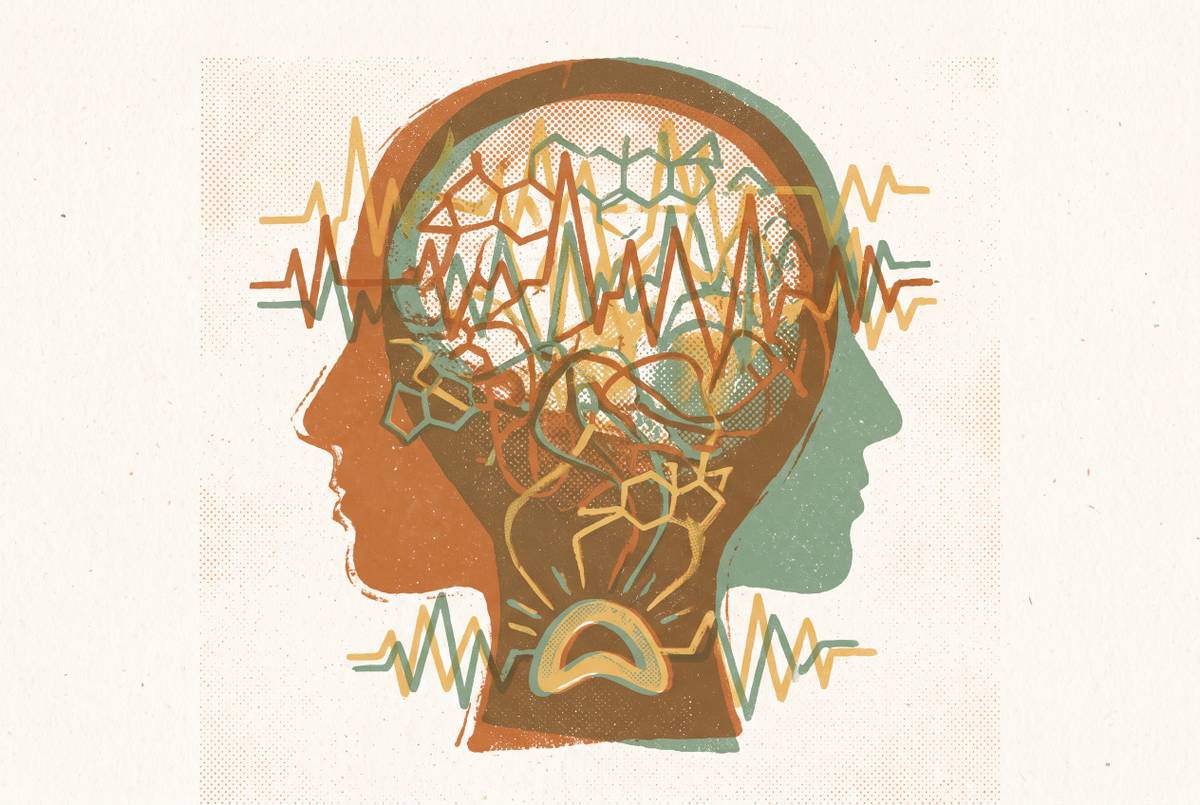
Estradiol functions as far more than a reproductive hormone, and its behavior during perimenopause explains why mood symptoms appear when they do. The erratic fluctuations characteristic of this transition trigger the production of proinflammatory mediators and induce oxidative stress in neural tissue, a process that contributes to progressive effects on neurons over time. This is a biological mechanism with consequences for mood regulation, not an abstract hormonal shift happening somewhere in the background.
The hypothalamic-pituitary-adrenal axis, the body's central stress-response system, gets pulled into this picture as well. A woman experiencing perimenopausal anxiety is not contending with one hormonal system destabilizing in isolation. She is contending with at least two interacting systems, sex hormones and stress hormones, moving together in ways that amplify the net effect on mood.
Why does variability matter more than decline? Post-menopause operates on a different mechanism entirely: a sustained, stable, low-estrogen state. The brain can often adapt to a stable state, even a low one, more readily than it can adapt to a hormone level that swings sharply from one week to the next. Perimenopause asks the brain to recalibrate constantly, and it is that constant recalibration, not the eventual low baseline, that appears to drive the mood disruption.
This has a direct and somewhat counterintuitive clinical consequence. A woman's estradiol level, measured on any single day, may fall entirely within a normal range even while the underlying variability is actively driving her symptoms. FSH, follicle-stimulating hormone, behaves in a comparably unreliable way: ovulatory and anovulatory cycles can alternate unpredictably during this transition, and FSH levels vary substantially even across that alternation. The American College of Obstetricians and Gynecologists notes for this reason that FSH testing should not serve as a single diagnostic tool. One test, taken once, cannot characterize a pattern that is defined by its movement over time.
How perimenopause stages shape the mood symptom timeline
If variability drives the mood symptoms, then the timeline of that variability deserves close attention, because it does not look the same at every stage of the transition. The STRAW+10 criteria provide the standard staging framework: early perimenopause begins when cycle length starts varying by seven or more days from a woman's usual pattern, late perimenopause is marked by a stretch of amenorrhea lasting 60 days or more, and the entire transition only concludes after 12 consecutive months without a period. These stages give a rough map of where a woman sits in the process, though the map is better read as orientation than as a precise countdown.
The transition itself typically unfolds somewhere between ages 40 and 58, spanning several years for most women, though the range is wide enough that any individual timeline should be treated as just that, individual. A survey of U.S. women published in npj Women's Health complicates the standard staging picture further: it found significant symptom burden, including psychological symptoms, even among women aged 30 to 45, suggesting the window of vulnerability may open well before the conventional staging criteria would predict.
One might ask what determines why two women at the same hormonal stage can have such different mood experiences. Longitudinal data from a large multi-site cohort study tracking women through the menopause transition offers an answer rooted in each woman's starting point. Among women with low baseline depressive symptoms, the data show a modest increase in depressive symptoms up until about one year before the final menstrual period, followed by a small decrease. Among women with high baseline depressive symptoms, the trajectory runs almost opposite: a steep decline beginning around four years before the final menstrual period. Prior mental health history predicts a fundamentally different mood curve through the transition, not just a different baseline severity.
That finding carries a practical implication for anyone waiting for a clear signal to start paying attention. Waiting for the textbook signal means missing a window that, for some women, opens years earlier.
What mood symptom tracking means in practice
The phrase "mood tracking" tends to conjure a journal, a habit of writing down feelings at the end of the day, something closer to a diary than a diagnostic tool. The version that matters clinically is structured, cycle-anchored data collection with specific variables recorded at a specific frequency, built to produce a pattern a clinician can read.
Because standard depression instruments miss irritability-dominant presentations, tracking has to capture irritability, emotional reactivity, and anxiety as distinct, separately logged dimensions rather than folding everything into a single low-mood score. A woman whose dominant symptom is rage or reactivity, not sadness, needs a record that reflects that, since a generic mood scale built around sadness will underrepresent what she is experiencing.
The anchor that makes the data useful is timing. Recording a mood state relative to cycle day, or, once periods become irregular in late perimenopause, relative to the number of days elapsed since the last bleed, creates a temporal structure that links affect to hormonal phase. Without that anchor, a log of mood ratings is just a list of numbers. With it, the log becomes a timeline that can be laid directly against what is known about hormonal fluctuation across the cycle.
Several specific data points give that timeline enough resolution to be useful: a daily mood rating on a consistent scale, the specific symptom type experienced (irritability, anxiety, low mood, tearfulness, rage), its severity, the time of day it occurred, sleep quality from the night before, and whether vasomotor symptoms, hot flashes or night sweats, occurred on the same day. That last variable matters because vasomotor and mood symptoms appear to share hormonal drivers, so tracking them together can reveal a co-occurrence pattern that tracking mood alone would miss.
Frequency matters as much as content. Daily logging during periods of active symptoms produces a pattern that weekly or monthly recall simply cannot reconstruct. Recall bias is a well-documented problem in retrospective self-report, and it is particularly acute for mood fluctuations, which women often normalize in the moment or forget by the time a clinical appointment arrives weeks later. A log built in real time sidesteps that distortion.
One further data point deserves attention as a bridge into the next question, which is how this data interacts with hormone testing. Prospectively tracked menstrual bleeding patterns, recorded as they happen rather than recalled afterward, can alert a clinician to periods of increased vulnerability to mood episodes. It is a low-cost, patient-generated signal, and its value extends well beyond simple cycle prediction into anticipating when mood symptoms are likely to intensify.
Why longitudinal patterns matter more than a single hormone test
A single hormone test, taken in isolation, tells a limited story, and so does a single mood report taken the same way. The clinical value of either kind of data comes from watching the relationship between them unfold across repeated observations, not from any one measurement in isolation.
Estradiol's day-to-day volatility during perimenopause means a single blood draw can return a result well within normal range even while the underlying swings are actively producing symptoms. That single number is incomplete, a snapshot of one moment inside a series that moves substantially from week to week. FSH carries the same limitation. The European Society of Endocrinology's clinical guideline, issued in 2025, recommends against biochemical testing for the diagnosis or management of perimenopause and menopause in women older than 45, precisely because no single hormone value can serve as a definitive marker in a system defined by its own instability.
Repetition, rather than a better single test, is the way around that limitation. Measuring estradiol, FSH, and progesterone at multiple points across a cycle, or across several months, reveals the amplitude of fluctuation that any one test conceals by design. A woman whose estradiol swings from a high point early in a cycle to a sharp trough a week later will show two very different numbers depending on when the blood is drawn. Only the series of measurements shows the swing itself.
That is where hormone data and mood data converge. Layering repeated hormone values against a daily mood log reveals patterns that neither data stream shows on its own: mood episodes clustering consistently around estradiol troughs, or anxiety that tracks reliably with the progesterone drop that occurs in the luteal phase. Those are patterns a clinician can interpret and act on, where an isolated low estradiol reading next to an isolated bad week offers little to act on.
The SWAN data covered earlier reinforces this same point from a different angle. Baseline depressive symptom history predicts a fundamentally different trajectory through the transition, so the starting point matters just as much as any single current reading taken at the appointment, and a woman's history is itself a kind of longitudinal data.
Despite this, tracking remains uncommon. Only 36.23% of perimenopausal women engage in any form of symptom tracking, a rate low enough to represent a substantial missed opportunity for the kind of pattern recognition described above. A woman who does not track her symptoms cannot bring that data into a clinical appointment; a clinician without that data is left working from memory and impression.
How documented mood data changes the clinical conversation
Walking into an appointment with a structured log changes what happens in the room. Instead of describing, from memory, how the last few weeks have felt, a woman can present a pattern: a chart showing mood ratings against cycle day, symptom type broken out by category, vasomotor co-occurrence marked alongside. She shifts from a position of trying to narrate an experience convincingly to a position of presenting evidence a clinician can read directly.
That shift matters given what Burgin and colleagues found in their 2025 study. A documented data record reduces the burden on the woman to convince her clinician verbally, replacing a conversation that depends on confidence and framing with a conversation that starts from a chart.
A prospective symptom log with cycle timestamps turns a subjective complaint into an objective pattern. For a clinician who lacks confidence navigating perimenopausal mood presentations, a record like this gives something concrete to respond to, rather than a story that can be set aside or redirected to a psychiatric referral by default.
Certain elements of that record do the most work inside the appointment. Each of these data points narrows the range of explanations a clinician has to consider.
Tracking bleeding patterns prospectively extends this same advantage forward in time. It functions as a low-cost early-warning mechanism, giving both the woman and her clinician a way to anticipate a period of heightened mood vulnerability before it arrives.
None of this asks a woman to self-diagnose. The record exists to present a pattern clear enough that a clinician can differentiate a perimenopause-driven mood symptom from a primary psychiatric illness, and to prompt the right concurrent testing, thyroid function included, given how closely its symptoms overlap with perimenopause itself. That is the distance between the opening scene of this piece, a woman handed a prescription with no hormonal evaluation in sight, and a woman who arrives with months of cycle-anchored data already assembled. The data does not replace clinical judgment. It gives that judgment something real to work with.
Sources
- Perimenopause symptoms, severity, and healthcare seeking in women in the US
- Mental health consultations during the perimenopausal age range: a qualitative study of GP and patient experiences
- Evaluating tools for assessing mental health disorders in perimenopausal women - PubMed
- Prevalence of Cognitive and Mood-Related Symptoms in a Large Cohort of Perimenopausal and Menopausal Women
- Psychological symptoms during perimenopause: a global perspective - PubMed