Why Calorie Restriction Fails for Perimenopausal Weight Gain
Hormonal shifts during perimenopause rewire metabolism in ways calorie counting cannot address.
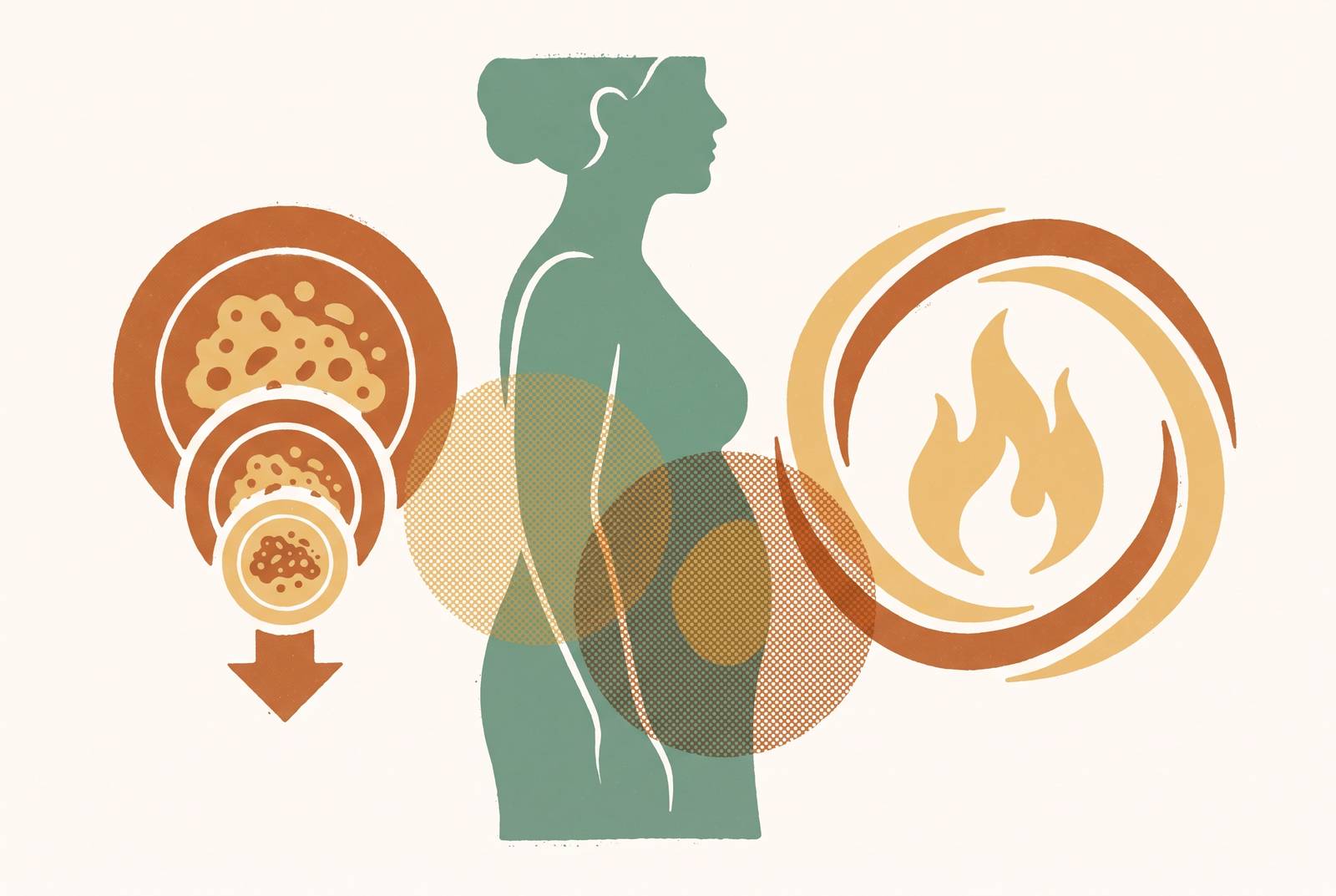
Most women have relied on calorie restriction for decades to manage their weight, but it stops working once perimenopause begins. The hormonal rewiring that happens during this transition changes the rules of a game a woman has already spent twenty or thirty years learning to play.
Why "Eat Less, Move More" Stops Working in Perimenopause
The pattern is familiar enough to be almost universal among women in their 40s and early 50s: eating less, exercising more, tracking food carefully, and watching the scale hold steady or creep upward anyway. The usual explanation, handed down through decades of diet culture, is that the woman must be miscounting calories, slacking on workouts, or simply not trying hard enough. That explanation misses what is actually happening inside her body. The arithmetic of calories in versus calories out assumes a stable metabolic system that processes food the way it did ten years earlier, and that assumption breaks down during perimenopause. What changes is not a woman's discipline. What changes instead is the hormonal environment that decides how her body stores fat, handles glucose, and burns energy at rest, and this shift comes on so fast and so deep that old strategies stop working mid-stream, not fading slowly.
What makes perimenopause metabolically different from every earlier decade
Culturally, people treat perimenopause as a slow fade, a gentle slide toward menopause that just mirrors what aging generally does. The actual hormonal picture looks nothing like a fade. Estrogen during this transition does not decline in a straight line. It spikes, sometimes well above levels a woman experienced in her 20s and 30s, then drops, then rises again, unpredictably, for years. That volatility, not simple decline, is what makes perimenopause so disruptive to systems that depend on hormonal steadiness. Progesterone tends to fall first, and more consistently, often well before estrogen starts its own decline, because ovulation becomes less frequent and progesterone depends on it. That early progesterone loss carries its own weight: progesterone has a calming, anti-inflammatory effect on the body, and without it, cortisol operates with less of a check on its activity. Testosterone adds a third layer: it declines gradually through a woman's 30s and 40s and often accelerates as perimenopause sets in, and that matters because testosterone helps maintain lean muscle. The management guide published by ClearHormones describes the entire transition as a 4-7 year remodeling of the endocrine system, not a single event with a clean before and after. Three hormones move at different speeds, in different directions, so the body faces a physiological situation it has never had to manage before. That is the foundation for everything that follows: not aging in the generic sense, but a specific, compounding hormonal state with no prior template.
How declining estrogen changes where fat is stored
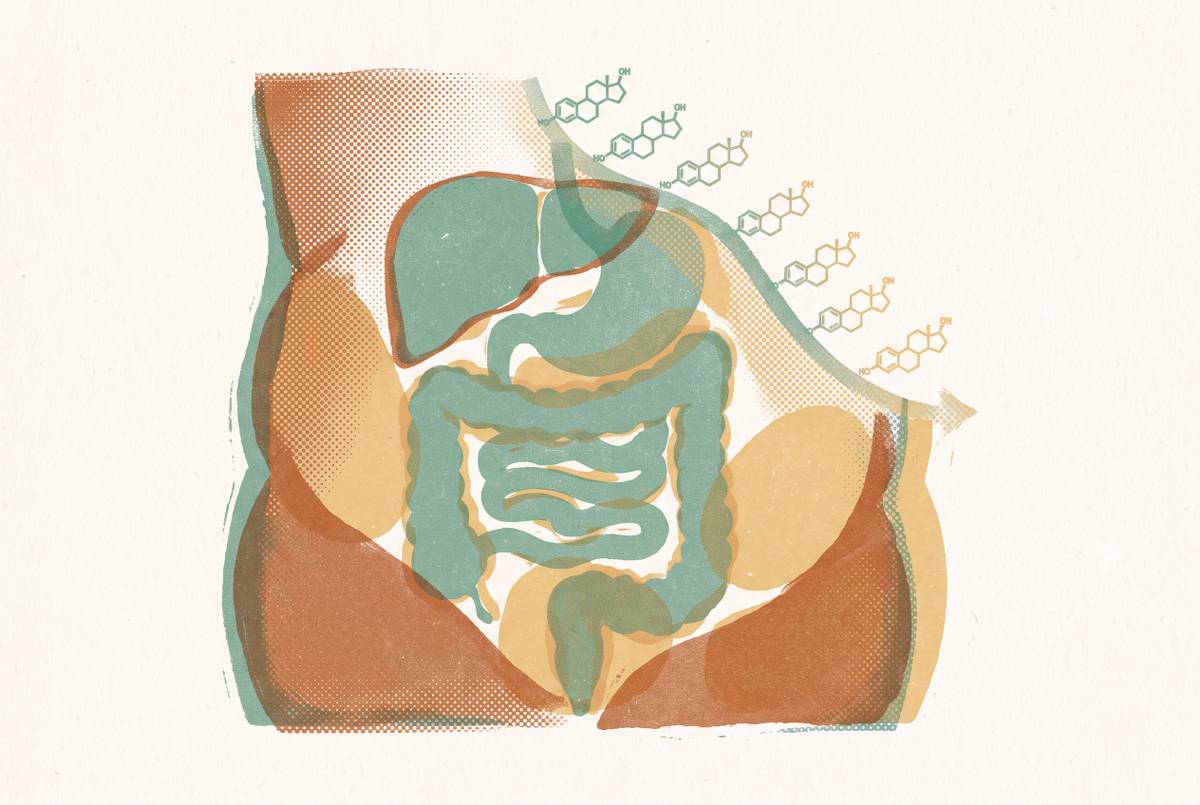
Estradiol does more than regulate reproduction. It governs where the body prefers to store fat, and when it declines, that preference shifts from the hips and thighs toward the abdomen, wrapping fat around internal organs. Davis and colleagues, in a review published in Climacteric and summarized by ClearHormones, found that central fat accumulation during the menopausal transition traces back to hormonal change itself. The mechanism runs through lipoprotein lipase, an enzyme estradiol regulates differently across fat depots. As estradiol falls, visceral depots become more active relative to subcutaneous ones, and fat begins accumulating in a location the body rarely favored before. Visceral fat is not passive storage. It behaves as metabolically active tissue, releasing inflammatory signals and contributing to insulin resistance, worsening the broader metabolic picture. ClearHormones notes that visceral fat increases across the transition no matter what total weight does, so the scale can stay almost flat even as her body composition and metabolic risk shift substantially underneath it. A calorie deficit, even one that produces some scale movement, often fails to touch this visceral accumulation, because the deficit does not override the hormonal signal directing where the fat goes.
How estrogen loss degrades insulin sensitivity
Fat redistribution is only half of what changes. The body's processing of the calories it takes in also shifts with estrogen decline. Estrogen plays a direct role in maintaining insulin sensitivity, and as it falls and fluctuates, cells become more resistant to insulin's signal. Insulin resistance is itself a direct hormonal effect, operating on its own timeline regardless of what the scale shows. The visceral fat accumulating through the mechanism described above compounds the problem, since that tissue itself drives further insulin resistance and inflammation, creating a loop where fat storage and glucose mishandling feed each other. A calorie deficit calculated against a woman's pre-perimenopause baseline no longer describes her current metabolic reality. The body storing more of a given meal and clearing glucose more slowly than it once did means the math a woman learned in her 30s doesn't describe the body she has in her 40s and 50s. Fat has moved to a new place, and glucose gets processed differently, so counting calories the old way no longer predicts results.
Why resting metabolism slows during perimenopause
A third system shifts alongside the first two: how many calories the body burns simply existing. Estrogen loss accelerates the loss of muscle mass, and because muscle is the primary engine driving resting metabolic rate, every pound of lean tissue lost lowers the number of calories burned at rest, shrinking a woman's calorie budget regardless of anything she does differently. ClearHormones cites research showing that the drop in resting energy expenditure after the final menstrual period reflects both this loss of lean mass and possible declines in mitochondrial efficiency. Estrogen supports muscle protein synthesis directly, and a 2025 review from Oova points to Hansen's 2018 paper in Proceedings of the Nutrition Society, which looked at estrogen's influence over muscle and tendon protein metabolism as a driver of perimenopausal lean mass decline. Testosterone's decline compounds the problem further: it weakens the hormonal support for building and holding onto muscle even when a woman keeps up a consistent strength training routine. Sleep disruption, one of the more common and under-discussed perimenopausal symptoms, plausibly amplifies all of it: poor sleep impairs the body's ability to recover, according to ClearHormones, degrading metabolic efficiency on top of the hormonal effects already in play. Fat storage has shifted, glucose handling has changed, and now the calorie burn itself has slowed. Three separate systems have moved, not one, and a fixed calorie intake that once represented a real deficit may now represent a much smaller one, or none at all, while visceral fat and insulin resistance continue building regardless of what the scale shows.
How calorie restriction worsens the hormonal environment
This is where the problem turns from frustrating to genuinely counterproductive. Sustained calorie restriction functions as a physiological stressor, and the body responds to that stressor by raising cortisol. The Educated Dieter, in content published in May 2026, lays out the mechanism directly: chronic restriction signals to the body that food has become scarce, cortisol rises in response, and elevated cortisol breaks down muscle for energy, slows thyroid function, and promotes insulin resistance. That cortisol response lands on a system already compromised by perimenopause's early progesterone loss. Progesterone normally buffers cortisol's effects and keeps inflammation in check, so when it declines early, it removes a safeguard just as calorie restriction starts demanding one. Cortisol, once elevated, preferentially drives fat storage into the abdominal region, the exact location where declining estrogen is already redirecting fat, so the two mechanisms reinforce each other. The Educated Dieter names the cycle outright: the most common response to a plateau, eating less and pushing exercise harder, raises cortisol further, suppresses whatever progesterone remains, and creates a relative estrogen-dominant environment that actively resists fat loss. Intense cardio stacked on top of an already restrictive diet adds to that cortisol load, since the body reads the combination as a threat and responds by conserving energy and holding onto fat. None of this means calorie intake is irrelevant to weight. It means a rigid, sustained deficit applied without regard for hormonal state can lock in the very stress response that keeps the deficit from working as intended, turning a woman's most familiar tool against her at the exact moment she needs it most.
Why a single hormone test cannot capture perimenopausal volatility
Given how much of this comes down to hormonal timing and fluctuation, the question of how to measure any of it becomes genuinely difficult. Estradiol swings up and down across weeks rather than declining steadily, so a single blood draw can return a number that looks entirely normal even in a woman whose transition is well underway. FSH follows a similarly unreliable path: it tends to rise as perimenopause progresses, but estrogen can temporarily suppress it back into a normal range, so one normal FSH reading does not rule anything out. Clinical guidance calls for two FSH readings taken four to six weeks apart in women under 45, while for women 45 and older, diagnosis typically rests on symptoms. The STRAW+10 framework, which defines reproductive stages using menstrual cycle changes alongside FSH levels, acknowledges this same limitation: FSH can stay in a normal range throughout perimenopause, which makes leaning on any single measurement a weak basis for a diagnosis. A longitudinal approach, tracking estradiol, progesterone, FSH, and related markers repeatedly over time, reveals the pattern of volatility that one snapshot cannot capture. For a woman trying to figure out whether her resistance to weight loss has a hormonal explanation, or whether some intervention she has tried is actually working, a single test offers a partial answer at best. Repeated measurement over months is what actually shows the shape of what's happening.
Distinguishing perimenopausal metabolic changes from thyroid dysfunction
One complication deserves direct attention before any of this gets attributed solely to reproductive hormones: thyroid dysfunction produces a strikingly similar symptom picture, and the two conditions can occur together. Menstrual irregularities, mood changes, fatigue, hair loss, and reduced sex drive appear in both conditions, and the overlap runs wide enough that either one can get dismissed as the other by a woman trying to make sense of her own symptoms. The European Menopause and Andropause Society's 2024 position statement on thyroid disease and menopause made this point explicitly, noting that sweating, mood changes, anxiety, low libido, and menstrual irregularity can also characterize thyroid disease, and advising clinicians to keep a low threshold of suspicion for thyroid disease whenever those symptoms appear. A few distinguishing signals can help separate the two. Weight distribution offers one: perimenopausal weight gain tends to concentrate around the abdomen, while hypothyroid weight gain tends to spread more generally across the body and often comes with puffiness or fluid retention. Vasomotor symptoms offer another: hot flashes, episodic and specific, mark perimenopause, while hyperthyroidism can produce heat intolerance and sweating that feels similar but runs continuous, a clue worth raising with a clinician. A woman working through the mechanisms described earlier, fat redistribution, insulin resistance, slowed resting metabolism, cortisol elevation, deserves a thyroid panel run alongside her reproductive hormone testing rather than one investigated only after the other has been ruled out.
Approaches That Fit This Hormonal Reality
Strength training gives the body a reason to preserve or rebuild the muscle that estrogen and testosterone decline otherwise erodes, and muscle tissue determines resting metabolic rate. Adequate protein intake supports that same muscle and works alongside strength training rather than substituting for it, because estrogen's role in muscle protein synthesis means the body needs more raw material to do with less hormonal support than it once had. Stabilizing blood sugar rather than minimizing total intake improves insulin resistance, because the body's handling of the glucose load matters as much as how much food arrives. Sleep and stress management address the cortisol side of the equation, given that poor sleep and chronic restriction both elevate cortisol through related pathways, and progesterone's early decline leaves less of a natural buffer against that elevation. Approaches like calorie cycling and carb cycling, built around varying intake rather than imposing a constant deficit, work from this same logic: they aim to avoid signaling sustained scarcity to a system already primed by hormonal volatility to interpret scarcity as threat. None of this erases the role calorie intake plays in weight. It reframes the goal from a fixed numerical deficit toward an approach that accounts for the hormonal environment that determines what that deficit actually does once it reaches the body. A woman navigating perimenopause is not working against a failure of discipline. She is working inside a metabolic system operating under entirely different rules than the ones she learned decades earlier, and the strategies that respect those rules are the ones with a real chance of working.