Subclinical Hypothyroidism and Fatigue in Midlife Women
Thyroid screening paired with menopause testing catches hidden dysfunction that single tests miss.
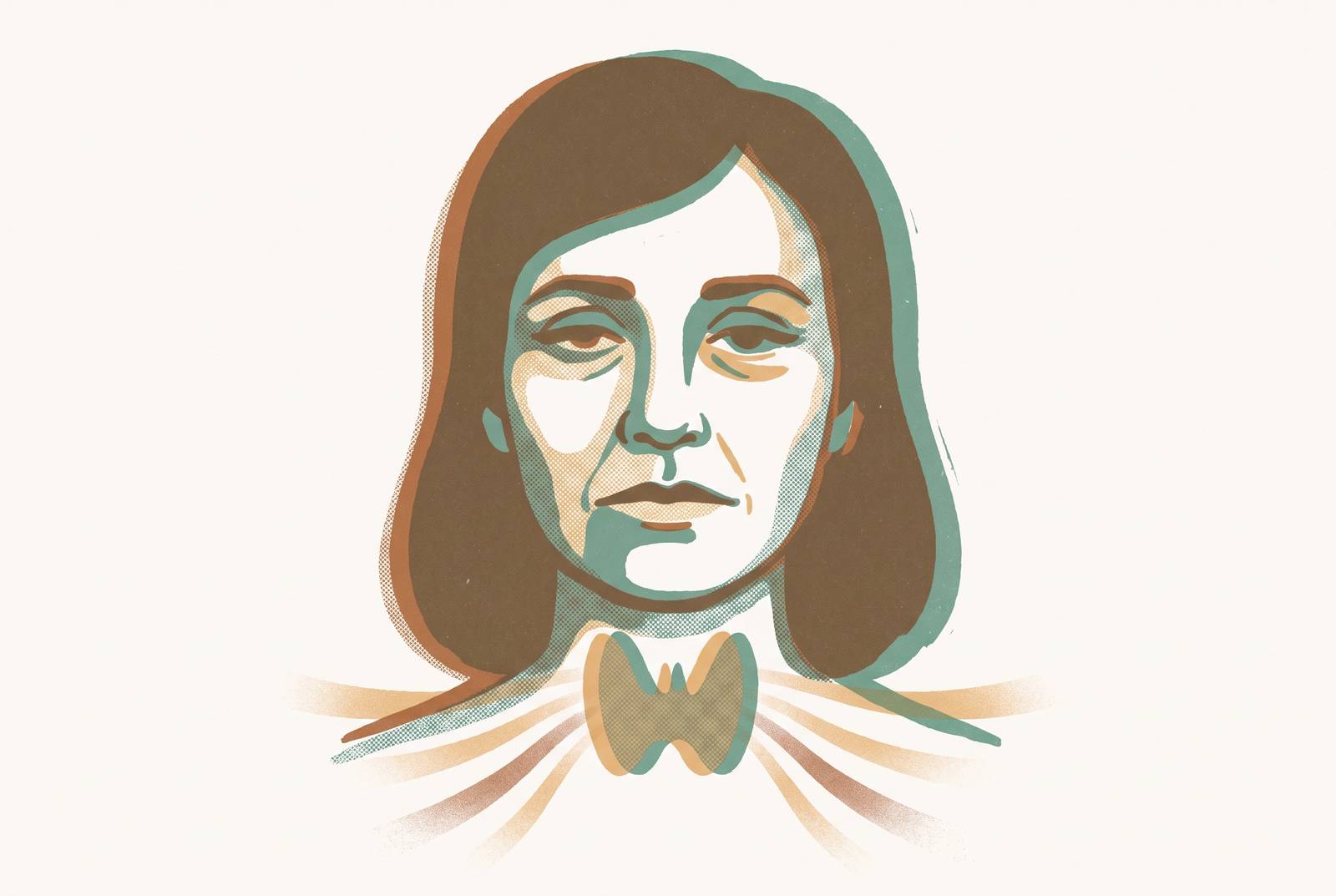
A woman in her late 40s notices she is tired in a way that sleep does not fix. The weight is shifting even though nothing in her diet has changed. Her mood feels unfamiliar, her thinking is foggier than it used to be, and she wonders, quietly, whether this is just what midlife feels like. It isn't a vague complaint to be managed with better sleep hygiene or a vacation. It sits at the intersection of two distinct, testable medical conditions, perimenopause and subclinical hypothyroidism (SCH), and neither can be assumed as the cause without ruling in or out the other. Treating fatigue at this life stage as an expected feature of a busy life, rather than a signal that calls for differential diagnosis, is where the diagnostic process typically goes wrong before it has even started. What follows is an argument for treating that fatigue as a clinical question with a real answer, not a personality trait of being a tired, overextended woman in her 40s or 50s.
Subclinical Hypothyroidism and Why It Is Easy to Miss
Subclinical hypothyroidism is a biochemical state rather than a disease with a clean, visible presentation. It is defined by an elevated thyroid-stimulating hormone (TSH) alongside a thyroxine (T4) level that remains within normal range, so the thyroid is working harder than it should while its actual output has not yet dropped low enough to register as overt hypothyroidism. Because the definition rests on lab values rather than a distinct symptom pattern, SCH frequently produces no symptoms, and that absence is precisely how it slips past women whose fatigue gets attributed to something else. When symptoms do show up, Cleveland Clinic lists fatigue, unexplained weight gain, constipation, depression, decreased attention span, cold intolerance, dry or coarse skin and hair, diastolic hypertension, and frequent or heavy menstrual bleeding. The condition is further divided into two grades based on TSH level: grade 1 runs between 4.5 and 9.9 mIU/L, and grade 2 is defined as 10 mIU/L or higher, a distinction Cleveland Clinic ties directly to treatment decisions. The most common cause behind SCH is Hashimoto's thyroiditis, an autoimmune condition. Thyroid antibody testing belongs in a serious workup. SCH can resolve on its own, stay put indefinitely, or progress toward overt hypothyroidism, and no single test can predict which path a given case will take. That unpredictability is itself an argument for tracking the condition over time with repeat testing.
The Population Most Exposed to Both Conditions at Once
SCH and perimenopause are not simply two conditions that happen to be possible in the same woman. They converge on the same demographic window with striking regularity: women in their 40s and 50s, precisely when perimenopause is actively unfolding and thyroid disease prevalence is climbing. A study published in a mid-life health journal found SCH present in a meaningful share of perimenopausal women aged 40 to 55, with some of these women asymptomatic and others reporting mood disturbances, low energy, weight gain, mental confusion, and sleep disturbances, the exact cluster that sends women to clinicians seeking a perimenopause diagnosis. A 2025 cross-sectional study of postmenopausal women aged 45 to 70 found SCH was more common among women within years of menopause, squarely inside the perimenopause window, with significant associations to higher BMI, dyslipidemia, and hypertension. That same 2025 study notes that SCH is more prevalent in women than men and increases with age, particularly after menopause, because hormonal changes at this life stage may affect thyroid function and metabolism. The same mid-life health journal study adds that roughly a quarter of women in or near perimenopause are diagnosed with hypothyroidism, and that thyroid disease affects about one in eight women between ages 35 and 65. Put together, a clinician seeing a fatigued 48-year-old is looking at a high prior probability that both conditions are in play, alone or together, which makes ruling out only one of them statistically insufficient as a diagnostic strategy.
How Estrogen and Thyroid Hormones Interact During Perimenopause
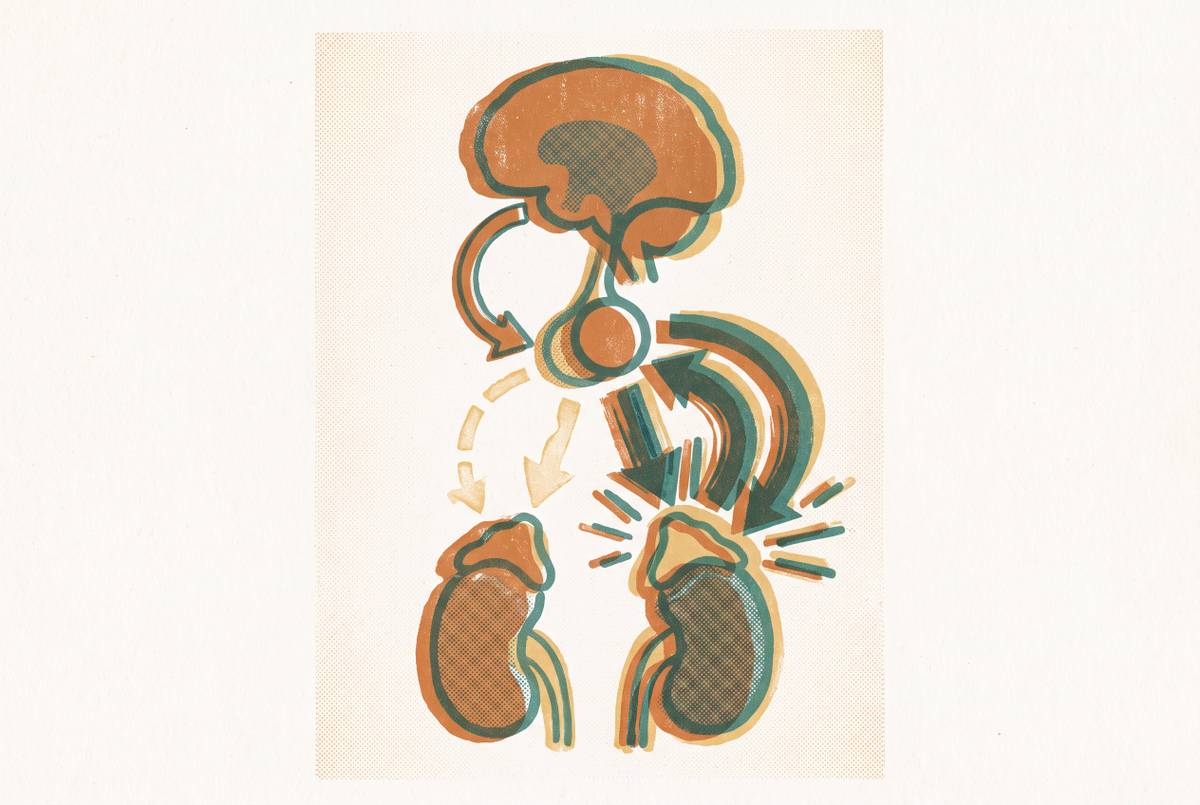
Thyroid hormone and the sex hormones are not operating on separate tracks. They govern overlapping systems, including energy and metabolic rate, mood, body temperature regulation, and the menstrual cycle, so dysfunction in either system tends to produce symptoms that look like the other's. During perimenopause, estrogen does not glide downward in a predictable line. It fluctuates, sometimes spiking before it eventually falls, and that instability means the estrogen-thyroid relationship is itself unstable, capable of shifting a woman's thyroid dynamics without a corresponding change showing up in a TSH or T4 result drawn on any given day. Thyroid hormones also regulate how FSH and LH receptors interact and affect how estrogen is metabolized in peripheral tissue. A study in Cureus documents that hypothyroidism lowers sex hormone-binding globulin and disrupts pituitary feedback, contributing to menstrual irregularities, which is one more symptom clinicians have to sort between the two conditions. One might argue that a woman starting hormone therapy has little reason to think about her thyroid at all, but if she begins treatment without establishing a thyroid baseline first, she risks missing the chance to detect a pre-existing SCH that her shifting estrogen environment goes on to unmask or worsen. The biology here is not a matter of two conditions coexisting by coincidence. The systems are coupled. Testing one in isolation can miss what the other is doing.
Why a single TSH test, or an estradiol test alone, is not enough to answer the question
Ordering TSH alone for fatigue or estradiol alone for suspected perimenopause can return a result that reads as normal while the condition driving a woman's symptoms remains active. For a meaningful thyroid baseline, TSH needs to be paired with free T4, and thyroid peroxidase (TPO) antibodies add real diagnostic value when fatigue or hair loss is prominent, because antibody positivity can flag the autoimmune process driving Hashimoto's before TSH itself climbs high enough to register as diagnostic. For perimenopause, FSH and estradiol together tell a more complete story than either marker alone, and progesterone adds useful information about luteal function, though even a full panel can be hard to read cleanly because estrogen, progesterone, FSH, and LH all fluctuate considerably across the transition. TSH itself is not a fixed, stable number across the calendar year. Research on seasonal TSH variation found levels run significantly lower in summer and autumn and higher in winter and spring, with a meaningful gap between the seasonal peak and trough, so a borderline TSH drawn in January could belong to a woman whose true baseline is comfortably within normal range by July. A single-marker test, read against a generic reference range and drawn at one point in time, is doing less diagnostic work than it appears to be doing, and the reassurance it offers can be false reassurance.
How the symptom overlap causes fatigue to become a psychiatric diagnosis instead of a hormonal one
When thyroid or hormonal fatigue goes unidentified, the symptom that remains most visible to a clinician is often mood, and mood symptoms in midlife women are routed into psychiatric treatment with striking regularity, the hormonal physiology that produces them frequently never investigated. The 2025 Perimenopause Focus survey, commissioned by Biote and conducted among U.S. women ages 30 to 60, found that a substantial share of women felt they were misdiagnosed when they sought care for perimenopause symptoms. Among those who were prescribed medication for a mental health condition, a large proportion believed they had not been appropriately diagnosed in the first place, with anxiety, depression, mood swings, and panic attacks as the most common substitute diagnoses they received instead. Why does this keep happening? Part of the answer is informational: the same survey found only about a quarter of women were learning about perimenopause from a primary care provider or OB/GYN, with most turning instead to search engines or family members for guidance. That same study states that subclinical hypothyroidism in perimenopausal women is usually underdiagnosed and ignored, which makes the psychiatric misattribution pattern a predictable outcome of failing to screen for SCH in this population. The sequence runs in a consistent direction: fatigue and mood symptoms appear, a single-marker test comes back borderline or normal, a psychiatric diagnosis and prescription follow, and the underlying hormonal cause goes untreated while symptoms persist or worsen.
Subclinical Hypothyroidism and Cardiovascular Risk in Perimenopause
Undetected SCH in a perimenopausal woman carries consequences well beyond ongoing tiredness. It places her on an elevated cardiovascular risk trajectory at the exact life stage when that risk is already climbing as estrogen declines. That study found that elevated TSH in perimenopausal women was associated with hypertension, hypertriglyceridemia, and unfavorable cholesterol ratios, all of which accelerate atherosclerosis and raise the risk of premature coronary artery disease. The 2025 postmenopausal study reached a similar conclusion, finding that SCH in this population was significantly associated with higher blood pressure and altered lipid profiles compared to women with normal thyroid function. Cleveland Clinic notes a possible connection between SCH and increased cardiovascular risk, including high blood pressure and high cholesterol, while being careful to say the evidence is not yet definitive. That distinction matters: the association is real enough to justify attention, but it has not been established as a direct causal chain from SCH to heart disease. Screening for SCH in perimenopausal women is about catching a modifiable metabolic risk factor before it compounds into cardiovascular disease over the decade that follows menopause, not only about relieving fatigue in the present.
Clinical Guidance on Treating Subclinical Hypothyroidism
Most people diagnosed with SCH are advised to pursue watchful waiting rather than immediate treatment, and there is a sound clinical logic behind that caution. Most cases are mild, many resolve without intervention, and over-treatment carries genuine risk, particularly iatrogenic hyperthyroidism, which is linked to bone density loss, a serious concern for women already losing bone at an accelerated rate through menopause. Cleveland Clinic specifies that levothyroxine treatment is generally recommended for TSH at 10 mIU/L or higher, for young and middle-aged people who have symptoms, and for those carrying additional risk factors, so symptomatic midlife women do have a legitimate clinical basis for considering treatment. That basis requires a confirmed abnormal result. A Wales cohort study found that more than a third of patients who received levothyroxine had only one abnormal test result before their first prescription, a pattern the study's authors flagged as inconsistent with best practice and a direct product of how thin the evidence base for SCH management actually is. That same study describes SCH as a biochemical disorder where the evidence on treatment benefit remains limited and genuine controversy persists among clinicians managing it. For a symptomatic perimenopausal woman, watchful waiting without repeat testing can mean years of unattributed fatigue, accumulating cardiovascular risk, and no clear sense of whether her thyroid status is holding steady, improving, or progressing. That is the strongest case for serial monitoring over time, rather than treating one result as a final, binary verdict.
What a Woman Should Ask For When She Presents With Fatigue in Midlife
A woman presenting with fatigue, weight changes, mood shifts, or cognitive changes in her 40s or 50s does not have to accept a single-marker test as a complete evaluation, and she can ask specifically for a panel that addresses thyroid and hormonal status at the same time. On the thyroid side, TSH paired with free T4 should be treated as the minimum meaningful baseline, and TPO antibodies are worth adding when fatigue or hair loss is prominent, since antibody positivity can reveal autoimmune thyroid disease before TSH itself rises to diagnostic levels. Because TSH shifts with the season and hormone levels move across both the menstrual cycle and the broader perimenopausal transition, a single result functions as one data point rather than a diagnosis, so requesting repeat testing at a consistent time of year, and at a consistent point in the cycle where that applies, produces information that is actually possible to interpret. When a result comes back borderline, direct questions worth putting to a clinician are these: is this result being measured against an age-appropriate reference range, has a confirmatory repeat test been ordered before any treatment decision gets made, and what would change the interpretation if this same result looked different three months from now? Tracking results over time, rather than leaning on a single snapshot, is what allows a clinician and a patient together to tell a stable borderline TSH apart from one that is actively trending, and to see whether perimenopausal hormone shifts line up with symptomatic changes. That kind of longitudinal picture is not something a single office visit can produce on its own.
The Standard Care Model and Conditions That Change Over Time
The standard approach to both conditions, a single test read against a static reference range, followed by watchful waiting or a one-time treatment call, is built for a world of fixed thresholds crossed on a given day. SCH and perimenopause are defined by hormonal change that unfolds over years, and a system structured around one-time rule-outs is poorly matched to a reality that keeps moving. Women are already more likely than men to report being minimized, misdiagnosed, or ignored in clinical settings, and perimenopause stands as a documented example of a life stage where many clinicians received limited training and where the standard of care has lagged behind the evidence base for years. A clinical study on subclinical hypothyroidism in perimenopausal women concludes directly that the condition is usually underdiagnosed and ignored, and that timely screening and treatment could lower the risk of accelerated atherosclerosis and premature coronary artery disease in this population. That is a clinical recommendation the current system does not reliably act on. What changes this is a shift toward a monitoring framework that treats midlife hormonal health as a trajectory worth following rather than a condition to rule out once and set aside. A woman who understands what to test, why it needs testing more than once, and how to read her own results against her own history walks into a clinical conversation with something sharper than a complaint: a set of questions a normal result does not get to leave unanswered.
Sources
- Subclinical Hypothyroidism: Symptoms & Treatment
- Subclinical Hypothyroidism and Associated Cardiovascular Risk Factor in Perimenopausal Females - PMC
- Subclinical Hypothyroidism in Perimenopausal Abnormal Uterine Bleeding Patients
- Subclinical hypothyroidism in Wales from 2000 to 2021: A descriptive cohort study based on electronic health records
- Prevalence and risk factors of subclinical hypothyroidism in postmenopausal women: A cross-sectional study