Poor Exercise Recovery as a Perimenopause Symptom
Hormonal shifts during perimenopause slow muscle repair and compound exercise fatigue.

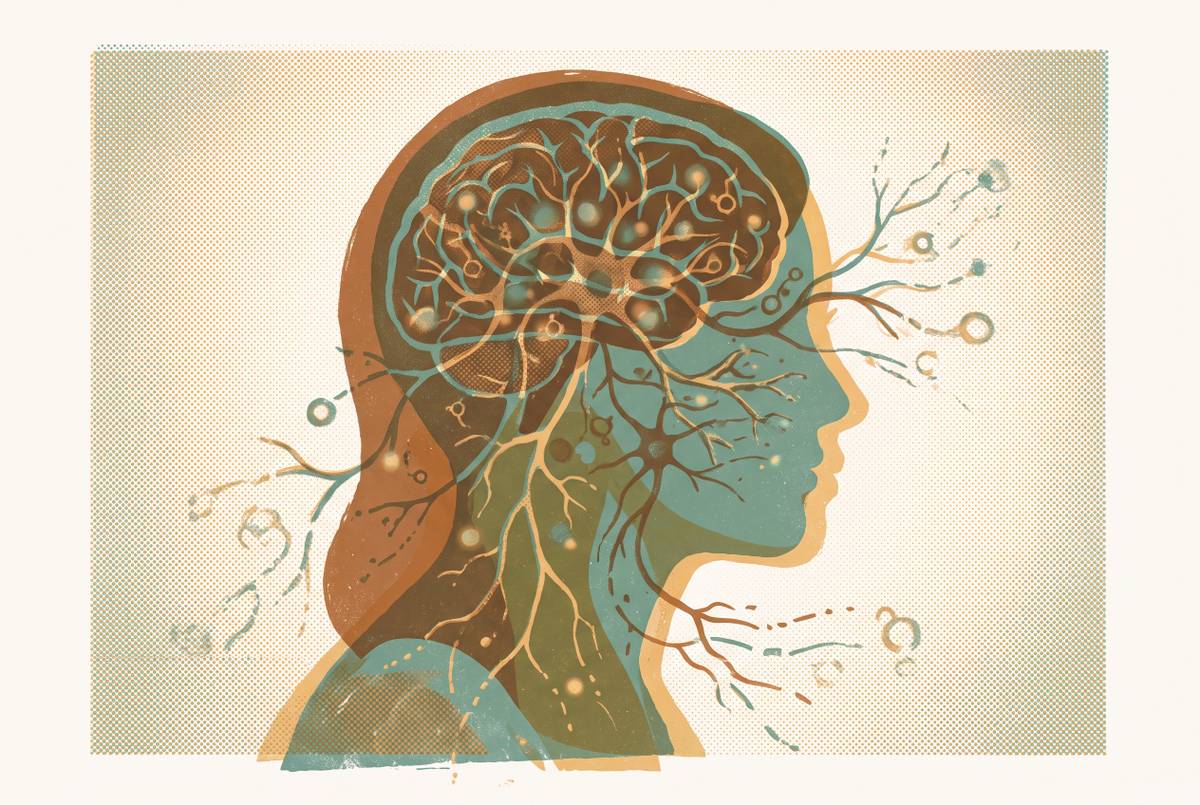
Poor exercise recovery can be a perimenopause symptom. Estrogen and progesterone help control muscle repair, inflammation, sleep, and how the body responds to stress. When those hormones fluctuate, a workout that once felt familiar can take longer to recover from. Understanding that change makes it possible to adjust training intelligently.
Why perimenopausal women find their workout recovery suddenly failing them
The workout that used to leave you feeling good now leaves you wiped out for two days. Your muscles stay sore, your energy returns slowly, and the next session arrives before you feel ready for it. The workout itself seems unchanged, but it takes more out of you. Pushing harder may leave you more tired without bringing back the results you remember.
This is a widely shared experience during perimenopause, but it is easily mistaken for aging, stress, or a loss of discipline. Those explanations do not adequately explain why a previously manageable routine suddenly becomes difficult to recover from. Treating the change as a fitness failure can lead to more intensity, fewer calories, or giving up altogether. The important distinction is between the work being asked of the body and its changing capacity to repair afterward.
What estrogen and progesterone actually do inside muscle tissue
Estrogen is an active participant in muscle protein synthesis, the process through which the body builds and repairs muscle tissue. As estradiol declines, that process can become less effective. The same amount of training may then take longer to recover from and lead to smaller gains.
Estrogen also has anti-inflammatory properties that matter after exercise. With less estradiol support, post-exercise inflammation can resolve more slowly, extending soreness and the time needed to return to baseline. Muscle repair and inflammation control are related parts of recovery, but they are not interchangeable. A workout can leave a woman waiting longer both for soreness to settle and for muscle tissue to recover.
Progesterone has a distinct role in this picture through its calming and sleep-promoting effects. Its early decline can disrupt the sleep on which effective muscle repair depends. Yet these changes do not follow a smooth downward line, because hormone levels fluctuate throughout the transition. That variability helps explain why the same routine can feel manageable one week and excessive the next.
How cortisol compounds the problem when the hormonal buffer is gone
The next part of the explanation concerns cortisol, a marker of hypothalamic–pituitary–adrenal (HPA) axis activity. As estradiol and progesterone decline, cortisol can rise and the regulation of the stress response can become less reliable. An elevated cortisol baseline can blunt the anabolic signal that supports building and repairing tissue after exercise. The effort still takes place, but the hormonal environment is less supportive of the repair that should follow.
This explains why adding more intense cardio can produce more fatigue. High-intensity sessions raise cortisol further in a system whose stress response may already be dysregulated. The limiting factor is not necessarily willingness to train, so greater determination does not resolve the mismatch.
Exercise also does not happen apart from the rest of life. Perimenopause often coincides with demanding periods of career and caregiving, adding psychological stress to the physiological load. Those demands can compound the same stress-response problem. The body therefore needs to be able to absorb the total load.
Why sleep disruption is a recovery failure in its own right, not just a side effect
Sleep belongs inside the recovery mechanism. Progesterone can lose some of its sleep-promoting influence before a woman recognizes that she is entering perimenopause. Along with bedtime habits, hormonal changes that cause hot flashes and night sweats can further disrupt sleep. Xiangrong Liu et al.’s 2025 study in Archives of Gynecology and Obstetrics found poor sleep quality in 70.54% of perimenopausal women participants. That finding describes the study’s participants, but it shows how prominent sleep problems can be in this setting.
When sleep suffers, the body repairs tissue less well and cortisol can rise. The next workout then starts before the body has fully recovered and while it is under more stress. Soreness and fatigue that last can make sleep worse in turn, creating a feedback loop between poor sleep and poor recovery.
This distinction matters because training changes alone may not resolve a hormonally driven sleep problem. Better sleep hygiene alone also cannot account for the loss of progesterone’s sleep-promoting effects or for night sweats. Tracking sleep quality can help show both how symptoms change and how well the body can recover from its exercise load. A routine that repeatedly leaves sleep and soreness worse deserves a different interpretation from one that supports recovery.
When in the perimenopause timeline these recovery changes are most likely to appear
Recovery problems can start before a woman notices changes in her menstrual cycle. Progesterone can decline early, while estrogen becomes erratic, so disrupted sleep and reduced energy may arrive before the transition has a recognizable name. For a woman in her early-to-mid 40s, unexplained changes in recovery can therefore make perimenopause a plausible consideration even without classic vasomotor symptoms.
The STRAW+10 framework stages the transition through hormonal and menstrual changes. In Stage -2, early perimenopause, progesterone is already declining and estrogen is erratic as cycles begin showing measurable variability, including ≥7-day differences between consecutive cycles. In Stage -1, late perimenopause, hormonal swings are at their most erratic, and vasomotor, mood, and physical symptoms cluster.
Reisel et al. (2024) in BJPsych Open found that feeling tired or lacking in energy was the most prevalent symptom in a large cohort presenting at a menopause clinic. It was reported by 96% of participants and ranked above hot flushes and night sweats. That clinic finding does not establish when any individual’s recovery problems began.
Why a single hormone test can give a misleading picture of what is happening
FSH and estradiol fluctuate dramatically during perimenopause, so a single measurement can catch an apparently normal moment within a much less stable pattern. Early in the transition, estradiol can even be elevated in some cycles. Through negative feedback, that higher estradiol can suppress FSH, allowing FSH to appear normal despite substantial hormonal fluctuation.
A normal FSH result in a symptomatic woman in her early-to-mid 40s therefore does not rule out perimenopause. NICE and ACOG acknowledge that routine hormone testing is optional when diagnosing perimenopause in women over 45 with typical symptoms, reflecting the limitation of using a single point in time to describe a condition defined partly by change.
Timing can make a measurement more consistent without removing that limitation. When cycles still occur, FSH drawn on cycle days 2–5, in the early follicular phase, gives the most consistent reading, yet may still differ substantially weeks later. Anti-Müllerian Hormone (AMH) reflects ovarian reserve and offers a more stable longitudinal signal than FSH alone. It can add context to a panel, but the underlying interpretive task remains the same. A result must be considered in relation to symptoms and timing, rather than treated as a complete explanation of recovery capacity.
What serial hormone testing reveals that a single snapshot cannot
Serial hormone testing changes the object of attention from a value to a pattern. Measurements taken over time can show a result in the normal range and, weeks later, hormone levels that look very different. They can also reveal periods of elevated estradiol that a simple story of steady decline would miss. A high reading alone can still be part of the perimenopausal transition.
Longitudinal measurements can help distinguish several questions that a single draw leaves unresolved. These include whether estradiol is declining overall, whether FSH is trending upward, and whether cortisol remains elevated relative to an individual’s baseline. Population reference ranges help put results in context, but they do not show what hormone levels are usual for every woman. A result in that range may still be quite different from what is usual for her.
Tracking estradiol and progesterone over time can help explain why recovery changes even when the training load stays the same. Recording symptoms at the same time helps show how a woman feels and functions alongside her hormone measurements. The aim is to see whether an apparently random experience has a recurring pattern.
How to adjust training load when recovery is hormonally impaired
The training response follows from the mechanism. If muscle repair is less effective and cortisol is adding to the burden, more intensity is not a reliable answer to stalled progress. Matching the stimulus to current recovery capacity is more useful than defending a fixed workload. This can mean dialing down intensity, using walking or swimming, and giving recovery a larger place in the routine.
Muscle mass declines as estrogen drops, and strength work helps counter that loss while supporting metabolic rate and bone health. The distinction is between preserving a valuable form of exercise and insisting on an unchanging dose of it. Strength work can remain central while its intensity and the recovery around it adapt to how the body is responding.
Flexibility is especially relevant when hormonal fluctuations make capacity unpredictable. Adjusting intensity and recovery according to how the body feels on a given day is more appropriate than treating every scheduled session as an obligation to perform identically. Taking more rest between intense sessions gives the body time to repair with less help from hormones. That approach treats recovery time as a training variable governed by physiology.
How to bring poor exercise recovery into a clinical conversation and be taken seriously
Poor exercise recovery belongs in a clinical conversation about perimenopause, even though it is not commonly presented as a headline symptom. Fatigue, exercise intolerance, and slow recovery may take time to be linked to the hormonal transition. They can instead be attributed to stress, overwork, or depression. A productive conversation therefore starts with the specific change in function.
Useful details include disproportionate soreness after familiar workouts, a slower return to baseline, and disrupted sleep. Together, those observations describe what has changed, under what conditions, and with what consequences. Tracking when recovery is especially poor shows the clinician how symptoms unfold over time. Where longitudinal hormone measurements are available, bringing them together with those symptom records can make the pattern easier to discuss.
The purpose of bringing these records to a clinical discussion is to ask whether hormonal change offers a coherent explanation for symptoms that a fitness-based interpretation has failed to address. Well-organized data can help guide what to investigate, while clear wording keeps the discussion focused on how much harder recovery has become. A woman needs a clear account of what has changed and a clinical discussion that takes that change seriously.