IBS Diagnosis and the Hormonal Gut Connection in Perimenopause
Hormonal shifts during perimenopause directly alter gut function.
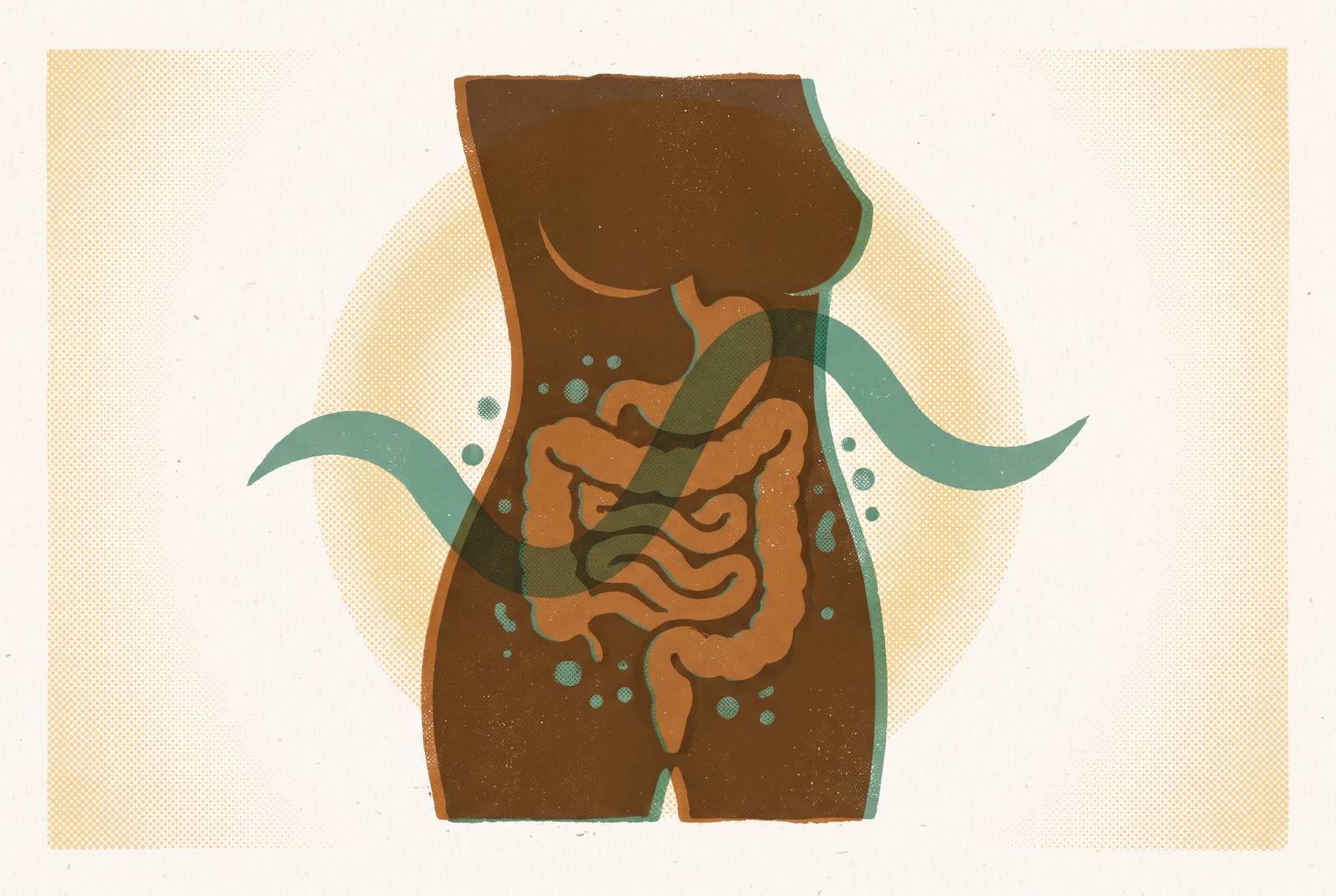
Perimenopause can cause or worsen IBS-like symptoms because fluctuating estrogen and progesterone alter gut movement, pain sensitivity, and gut-brain signaling. Yet digestive complaints are often attributed to diet, stress, or aging without exploring their hormonal context. To diagnose IBS correctly, clinicians need to recognize that link and check for other conditions, since perimenopause alone may not explain all the symptoms.
Why digestive symptoms surge during perimenopause and why clinicians underestimate them
A woman can arrive at a consultation with bloating, constipation, and abdominal pain and leave with dietary advice but no discussion of her changing menstrual cycle. If anxiety or poor sleep is also present, stress may become the explanation for everything. No one asks whether hormones play a part in her digestive symptoms. This is the clinical recognition gap that leaves digestive symptoms detached from the life stage in which they began.
The scale of the problem makes that omission consequential. Women’s Health Concern reports that 38% experience digestive symptoms for the first time with the onset of perimenopause. A large majority of perimenopausal and menopausal women report gut complaints, making these symptoms more than a peripheral concern. When these symptoms start gives a reason to look at whether hormones play a part, though timing alone cannot show what caused them in any one woman.
Hot flashes and night sweats readily lead clinicians to think of perimenopause, while changes in bowel habits may not. Dr. Stephanie Faubion, medical director for The Menopause Society, notes that digestive issues can occur with better-recognized menopause symptoms yet be overlooked or underestimated. What changes when clinicians look at those complaints together?
What perimenopause actually is and why its hormonal pattern matters for the gut
Perimenopause is an unstable hormonal transition. It typically spans four to eight years before the final menstrual period, often beginning in the mid-40s and sometimes in the late 30s. The STRAW+10 staging system distinguishes Early, Stage -2, from Late, Stage -1, perimenopause. These stages track how patterns change over time, without relying on a single hormone threshold.
In early perimenopause, cycle length begins to vary by seven or more days, while follicle-stimulating hormone, or FSH, is not yet consistently elevated. In late perimenopause, gaps between periods extend to two months or more. FSH becomes more consistently elevated, estrogen swings become more dramatic, and vasomotor symptoms intensify. The sequence helps explain why symptoms can appear before an apparently decisive blood result.
Progesterone generally declines before estrogen does as cycles become anovulatory more often and the corpus luteum becomes less reliable. Even a woman who still ovulates monthly may have falling progesterone while estrogen remains stable or rises. The balance shifts before both hormones fall. The term “relative estrogen dominance” describes that higher estrogen-to-progesterone ratio, which can arise while estrogen remains stable.
This early shift can accompany disrupted sleep, anxiety, and mood volatility, as well as changes in gut function. Later, estrogen itself becomes highly erratic before ultimately falling. A woman in her mid-40s can therefore experience symptoms associated with higher and lower estrogen at different points in the same year.
How estrogen and progesterone directly alter gut motility, visceral sensitivity, and the gut-brain axis
Estrogen and progesterone act on gut function through distinct pathways, including motility, visceral sensitivity, and serotonin-mediated signaling. The gut is a direct hormonal target. Progesterone slows transit, particularly during the luteal phase of the menstrual cycle. When progesterone fluctuates unpredictably during perimenopause, that slowing effect becomes less regularly cyclical, contributing to changes in bowel habit.
Movement is only part of the explanation. Estrogen and progesterone receptors exist in gut tissue, and hormonal fluctuations can alter sensitivity to stretch and pain signals. A change in discomfort therefore need not reflect only a change in how quickly the bowel moves. The common worsening of IBS symptoms around menstruation is consistent with hormonal modulation of these pain thresholds.
Research on how the body works shows that 90–95% of the body’s serotonin is made in the gut, where serotonin-mediated signaling helps control how the bowel works and how pain is felt. Estrogen fluctuations can disrupt that signaling. Stress and anxiety can then feed back into the gut-brain axis and worsen IBS flares, even while hormonal changes are contributing to the anxiety itself. A psychological influence is not evidence of an imaginary symptom.
The microbiome adds a two-way relationship to this picture. The estrobolome comprises gut microbial genes, and the microbes containing them, whose products can metabolize and recirculate estrogen. After estrogen undergoes conjugation, or glucuronidation, it enters the intestine through bile, where microbes influence how much returns to circulation. Hormonal change can disrupt the microbiome, while microbiome disruption can alter circulating estrogen.
Estrogen decline has also been linked to dysbiosis, reduced short-chain fatty acid production, increased intestinal permeability, and neuroimmune activation. These processes can further affect neurotransmitter pathways and amplify symptoms. Their clinical meaning still needs careful interpretation. No ideal gut microbial composition across perimenopause stages has been identified, and healthy microbiome profiles differ geographically. The estrobolome is a contributing mechanism whose value as a cure target remains to be established.
Together, these pathways help explain why IBS-type symptoms may worsen during perimenopause and settle after menopause. They do not establish that every new gut complaint has a hormonal cause.
Why do doctors mistake perimenopause symptoms for anxiety or dismiss them?
When hormonal effects on mood are recognized but their effects on the gut are not, anxiety can become an incomplete explanation for a combined symptom pattern. Diet, stress, and aging offer other readily available attributions. Each may play a part without explaining all the symptoms. The Canadian Digestive Health Foundation notes that women are more likely than men to be told their symptoms are “just in their head” and miss out on proper assessment for IBS.
The diagnostic overlap makes this problem harder. Bloating, abdominal pain, and altered bowel habits can reflect IBS, hormonally disrupted gut function without IBS, or hormonal worsening of pre-existing IBS. They can also reflect another disease. The Rome criteria help clinicians make a positive, symptom-based IBS diagnosis based on abdominal pain linked to changes in bowel movement frequency and stool consistency, which requires looking for an explanation before applying the label.
Recognizing perimenopause must not create a new shortcut. Women’s Health Concern advises that new, persistent gastrointestinal symptoms should always be discussed with a healthcare professional because they can be associated with autoimmune diseases, ovarian cancer, and bowel cancer. Hormonal plausibility does not exclude serious illness. Careful history-taking and structured investigation remain necessary even when symptoms began with cycle changes.
The specific diagnostic traps — endometriosis, ovarian cancer, and celiac disease as conditions that mimic or coexist with IBS
Endometriosis creates a particularly difficult overlap because its bowel symptoms can resemble IBS and follow a menstrual pattern. Lesions on or near the bowel can cause diarrhea, constipation, and painful bowel movements. A gastrointestinal presentation can therefore have a gynecological origin. Endometriosis affects roughly one in ten women of reproductive age, yet the interval from first symptoms to diagnosis often spans many years.
The difficulty is not always choosing between two diagnoses. IBS and endometriosis can coexist, with a pooled IBS prevalence of 23.4% documented among women with endometriosis. Shared mechanisms include sensitization, inflammation, mast cell activation, and microbiome changes. Both conditions can worsen around menstruation and respond to dietary changes, so neither cyclicity nor dietary improvement reliably separates them.
Dr. Kathy Huang, director of NYU Langone’s Endometriosis Center, has emphasized that treating one condition without the other can leave patients without the relief they seek. Rather than asking only whether abdominal symptoms fit IBS, a clinician also needs to consider pelvic pain and a possible gynecological source.
Ovarian cancer creates a different diagnostic trap. NICE guidance specifies that clinicians should consider ovarian cancer and check CA125 in women over 50 with new IBS-type symptoms, particularly bloating. Age and new symptom onset change the interpretation. The bowel cancer screening test offered from age 50 in England every two years also remains relevant, even when a woman believes her symptoms are IBS.
Celiac disease can likewise resemble IBS through overlapping gastrointestinal symptoms. Research into this overlap is ongoing at the Centre of Postgraduate Medical Education, Warsaw. Its practical significance here is straightforward. A plausible hormonal contribution does not remove the need to investigate a separate gut condition.
What an appropriate clinical workup actually looks like before an IBS label is applied
A proper assessment looks for symptoms that support an IBS diagnosis and checks for other conditions that could cause them. It is not merely diagnosis by exclusion. In perimenopausal women, the history should integrate bowel symptoms, menstrual changes, and pelvic pain because these connections influence what needs investigation. A gastrointestinal history alone may leave the central pattern unexplored.
NICE recommends that the first tests include a full blood count, inflammatory markers such as CRP or ESR, and a coeliac blood test. Clinicians often add thyroid testing for women in midlife and should think about CA125 when there is a clinical reason to check it. A stool test for faecal calprotectin can help distinguish IBS from inflammatory bowel disease when doubt remains. Warning signs may call for more tests, including colonoscopy. Not every patient needs every test.
The history should establish whether symptoms follow particular cycle phases, worsened at a recognizable point in the transition, or occur with pelvic pain suggesting endometriosis. Bowel mechanics deserve attention too. Pelvic floor dysfunction can cause constipation, incomplete evacuation, and difficulty controlling bowel movements. Women’s Health Concern says that women with these symptoms may need to see a pelvic health physiotherapist.
NICE, ACOG, and The Menopause Society state that routine testing is not required to diagnose perimenopause in women over 45 with typical symptoms. FSH and estradiol fluctuate substantially, and neither indicates how severe symptoms are, how long they will last, or whether treatment is needed.
For women under 45, or when a clinician is unsure, day-three FSH testing gives results that are more consistent if cycles are still regular. Early perimenopause can nevertheless involve elevated estradiol that suppresses FSH through negative feedback. Normal FSH therefore does not rule it out. The requirement for two elevated FSH measurements four to six weeks apart concerns diagnosing premature ovarian insufficiency in women under 40.
How tracking symptoms and hormones over time changes what a clinician can see
A consultation captures a moment in a fluctuating process. Keeping a record of diet, gut symptoms, bowel habits, and cycle phase together over time gives a clinician details that a woman may not remember at one appointment. A diary kept for several months can show whether symptoms get worse at the same points in the cycle again and again. The pattern is more informative than an isolated bad day.
A menstrual pattern can offer a clue to a hormonal contribution, but endometriosis and IBS can both worsen around menstruation. Tracking becomes more useful when it also records the location and timing of pain and any pelvic symptoms.
Hormone measurements require the same attention to context. Levels can differ substantially between women and fluctuate from hour to hour, while FSH and estradiol may be elevated in one cycle and normal in the next. Serial measurements, when clinically appropriate, can make an individual trajectory more legible than a snapshot. Repeated, clinician-reviewed blood panels may help explore whether progesterone is falling while estrogen remains elevated or FSH is trending upward.
That use is distinct from requiring tests for everyone. Hormone tracking does not replace the clinical assessment or establish the cause of bowel symptoms on its own. Its potential value lies in connecting measurements to cycle timing and symptoms.
What women should bring to their next clinical appointment
For women preparing for an appointment, the practical starting point is a symptom and cycle diary covering at least six to eight weeks. It should record food intake, gut symptoms, bowel habit, pain location and timing, and cycle phase. Bring the timeline as well as the symptoms. A note showing whether gut problems began with cycle irregularity gives the clinician a specific connection to examine.
Bring prior hormone results with their cycle dates, and a family history of endometriosis, ovarian cancer, bowel cancer, or celiac disease. Ask whether the checks include the NICE-recommended blood count, inflammatory markers, and coeliac test, with CA125 if there is a clinical reason to test it. Ask specifically about endometriosis if bowel symptoms occur with cyclical pelvic pain, painful periods, or pain during sex. That combination warrants consideration of a gynecological referral alongside a gastrointestinal pathway.
If eligible, complete bowel cancer screening rather than deferring it because symptoms seem like IBS. Where hormone testing is ordered, ask whether repeating it four to six weeks later would answer a clinical question and how cycle timing will inform interpretation. Testing needs a purpose beyond reassurance alone.
Finally, push back on stress attribution or a dietary handout offered in place of investigation. Stress can make real gut symptoms worse without explaining why they started or ruling out another condition. Ask what has been considered, what has been investigated, and how the hormonal timeline fits. A low-FODMAP handout alone cannot answer that.